Natalia Zagórska-Thomas is a Polish/British visual artist, art conservator and curator. Trained at Canberra School of Art (Australia) and St Martins and Central School of Art (London), she has exhibited in Australia, Poland, Spain, Cuba, Germany, Italy and in the UK – including at Victoria & Albert Museum, Royal Festival Hall, Barbican Centre, Sotheby’s, Swedenborg House, Tabula Rasa and Fitzrovia Chapel in London; and at El Centro Provincial de Artes Plásticas y Diseño (Havana); Galerie im Kornerpark (Berlin); Art Basel (Hong Kong); and Lokal 30 (Warsaw). She works as a textile conservator for institutions such as the Royal Academy, Victoria & Albert Museum, Museum of London, Royal Collection Trust, Museum of Islamic Art (Doha) and Wawel Royal Castle (Krakow). Natalia is the owner / curator of an independent gallery in London called Studio ExPurgamento, which shows work of international and British artists in all media. She has curated group exhibitions at Studio ExPurgamento and at other venues in London as well as in Verona and Havana.

© Natalia Zagórska-Thomas
Images by kind permission of:
Tabula Rasa Gallery
Franek Strzeszewski
Carol Wyss
Natalia Zagorska-Thomas.

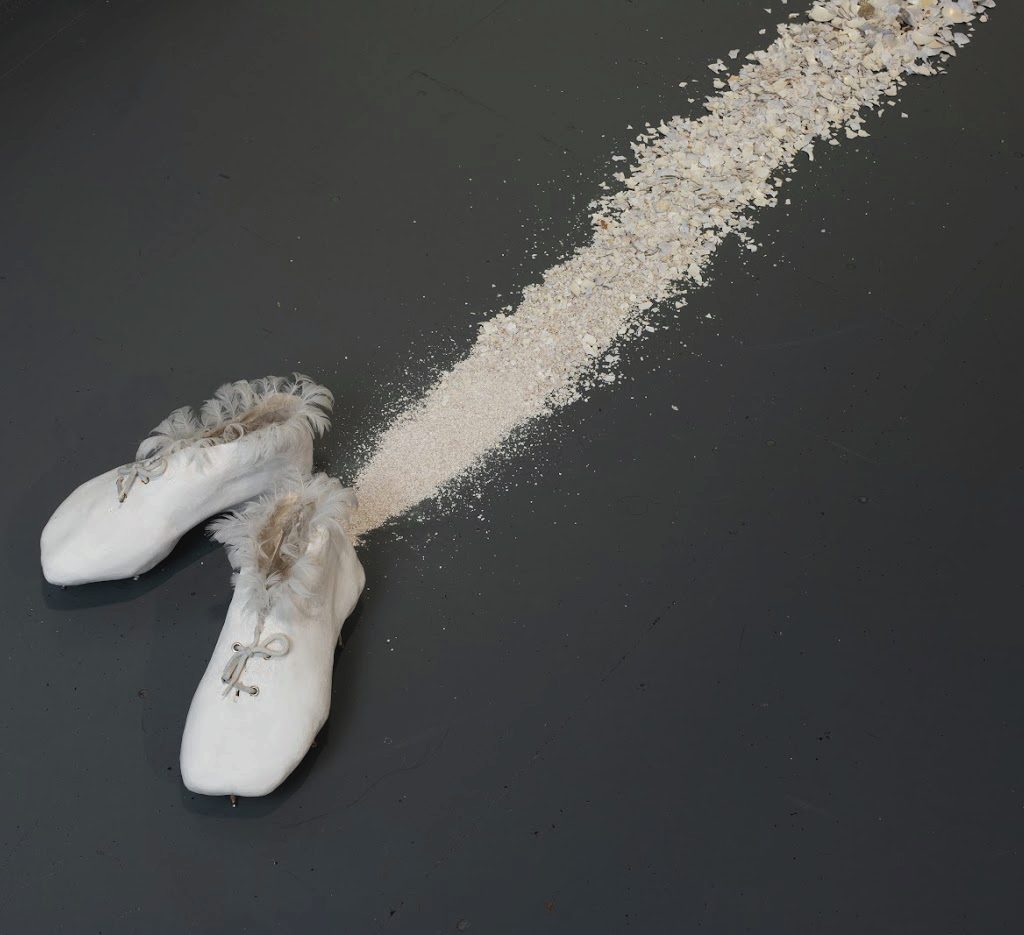
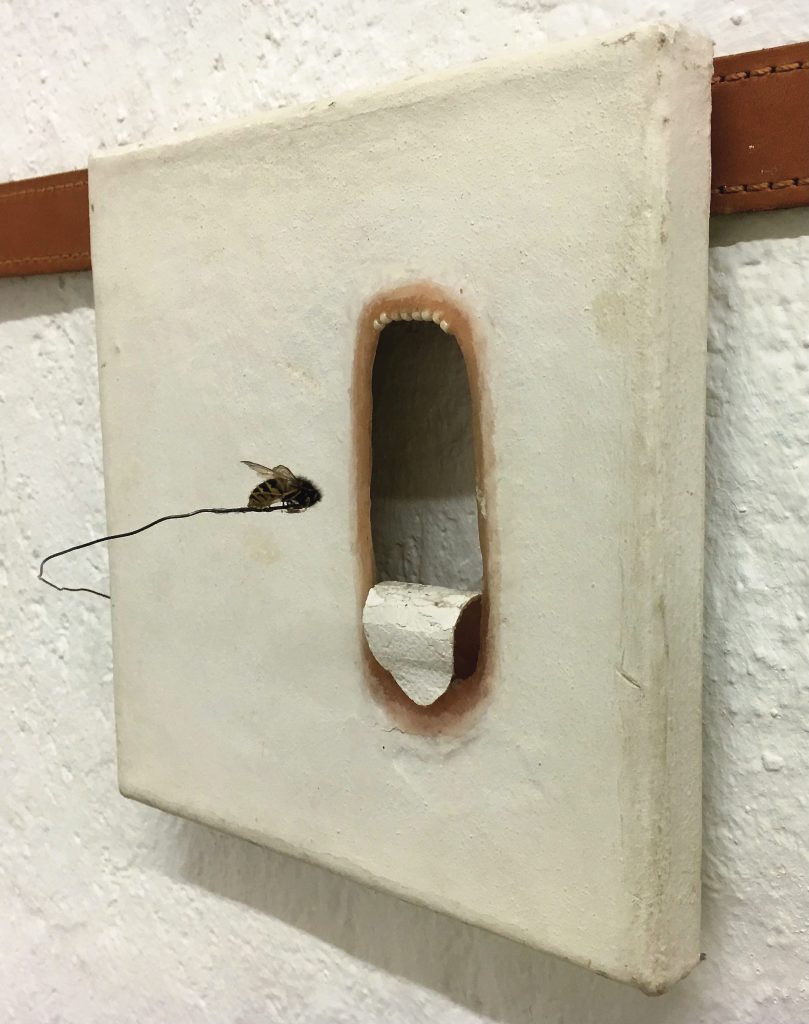
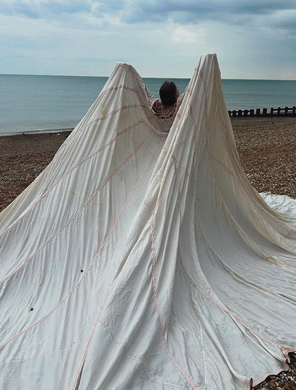
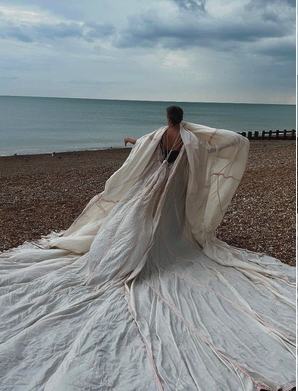
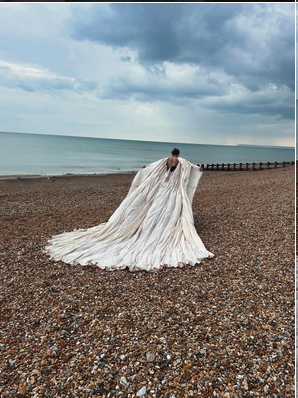
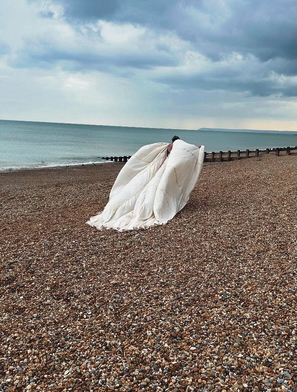
Untitled

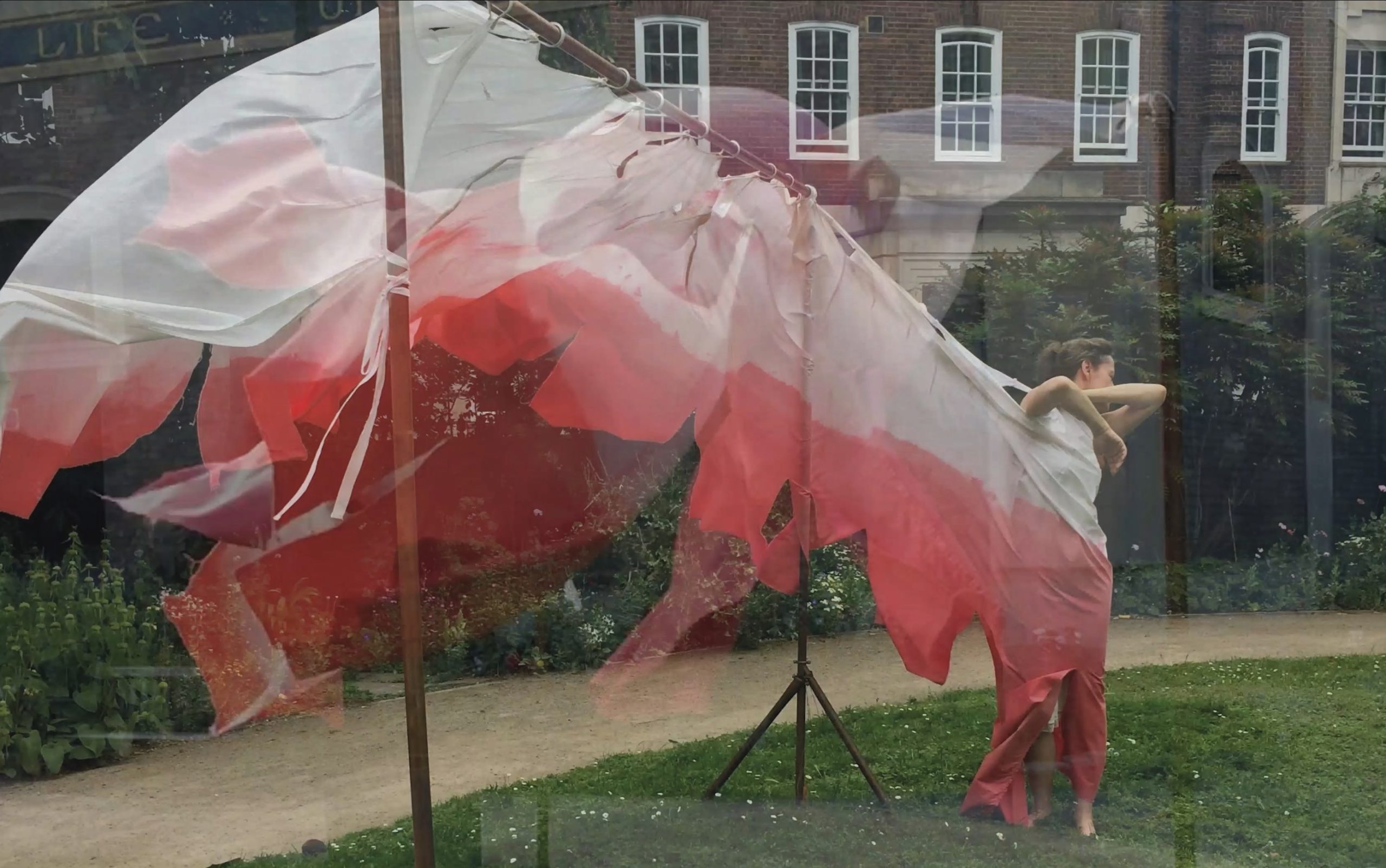
Still from a performance at the 2024 International Art Performance Festival at the Art Deco Museum in Płock

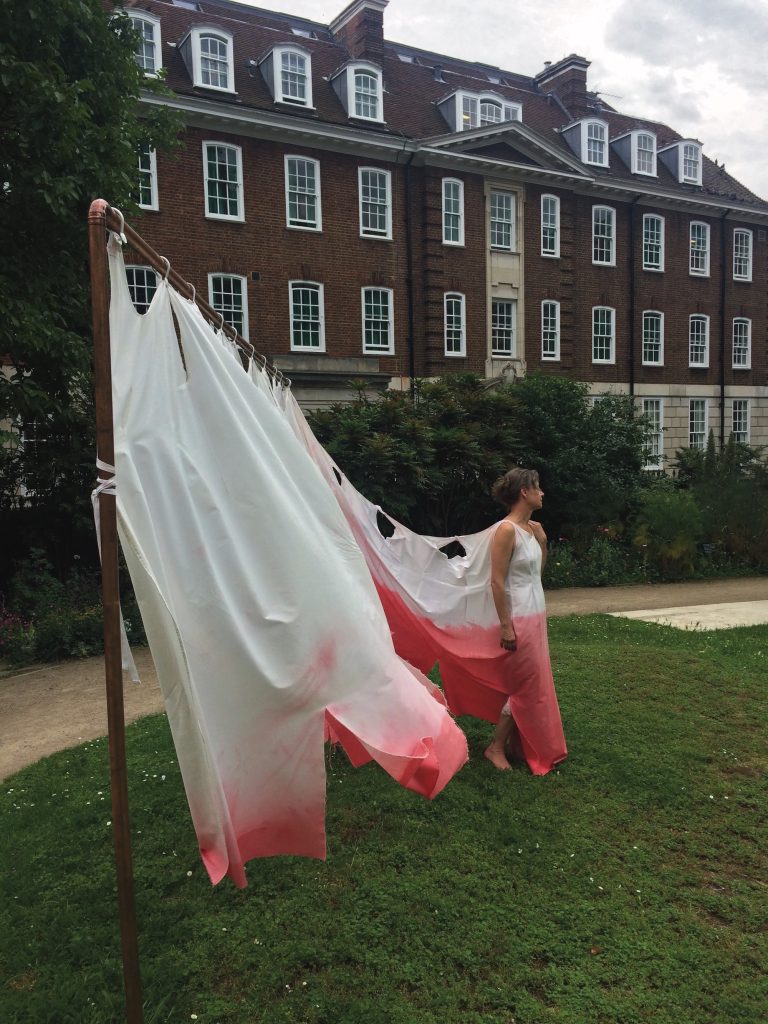
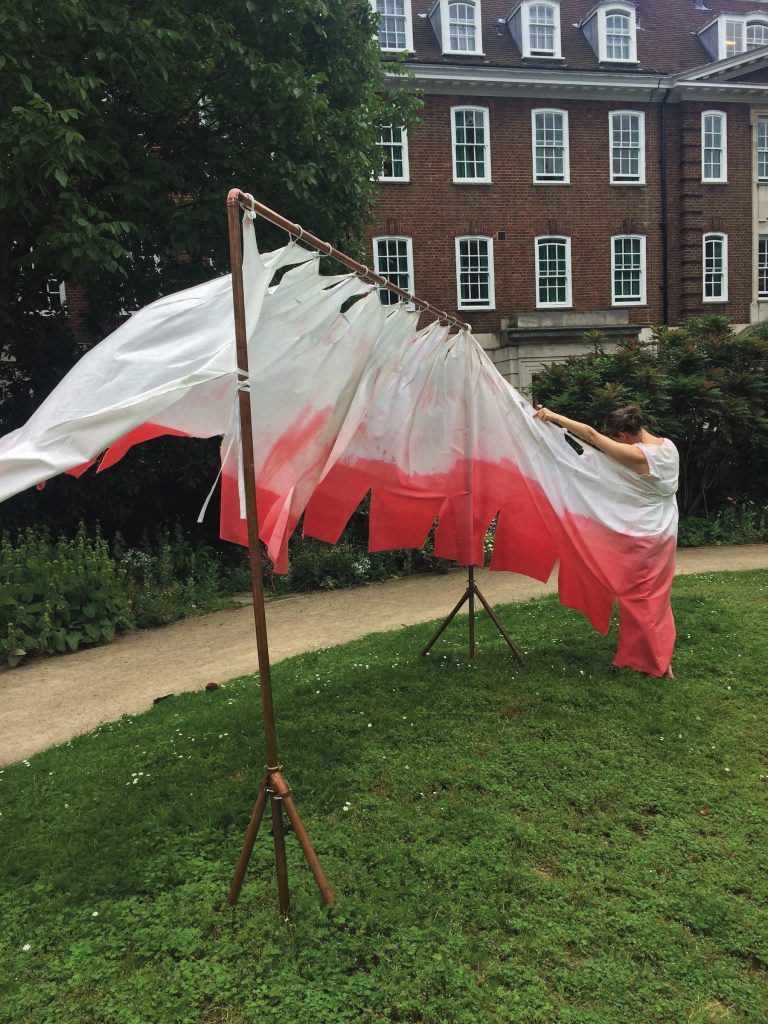
FOR GOD AND COUNTRY
Work made on the occasion of Polish Women on Strike, a national movement against the restrictions of Polish abortion laws by Peace and Justice party in 2016

My work rarely has titles. Unless the words come at the time of creation as an intrinsic part of the work itself, or the piece is actually inspired by words – I find it very difficult to place a label on it afterwards. I do not generally want to describe the piece or to lead the viewer into an interpretation which cannot be gleaned just by looking. Whatever the original intended meaning of the assertion that ‘Image always has the last word’ it has since been reduced in popular imagination to a disgruntled complaint that images shout louder than words. I disagree. The reality is much more complex and I find that titles can often dominate the meaning of visual art, diminishing its agency to that which can be described. There are exceptions. And there are artists who are consistently brilliant at titles. I’m just not one of them.On the other hand, as an art conservator working in museums, I deal with titles and object labels all the time. The difference is that those labels are meant to be descriptive and informative, they are to add context to an existing artefact, by situating it in historical or material reality. This of course comes with its own set of very complex and fascinating problems. My own works can best be described not as artefacts but as artefictions.

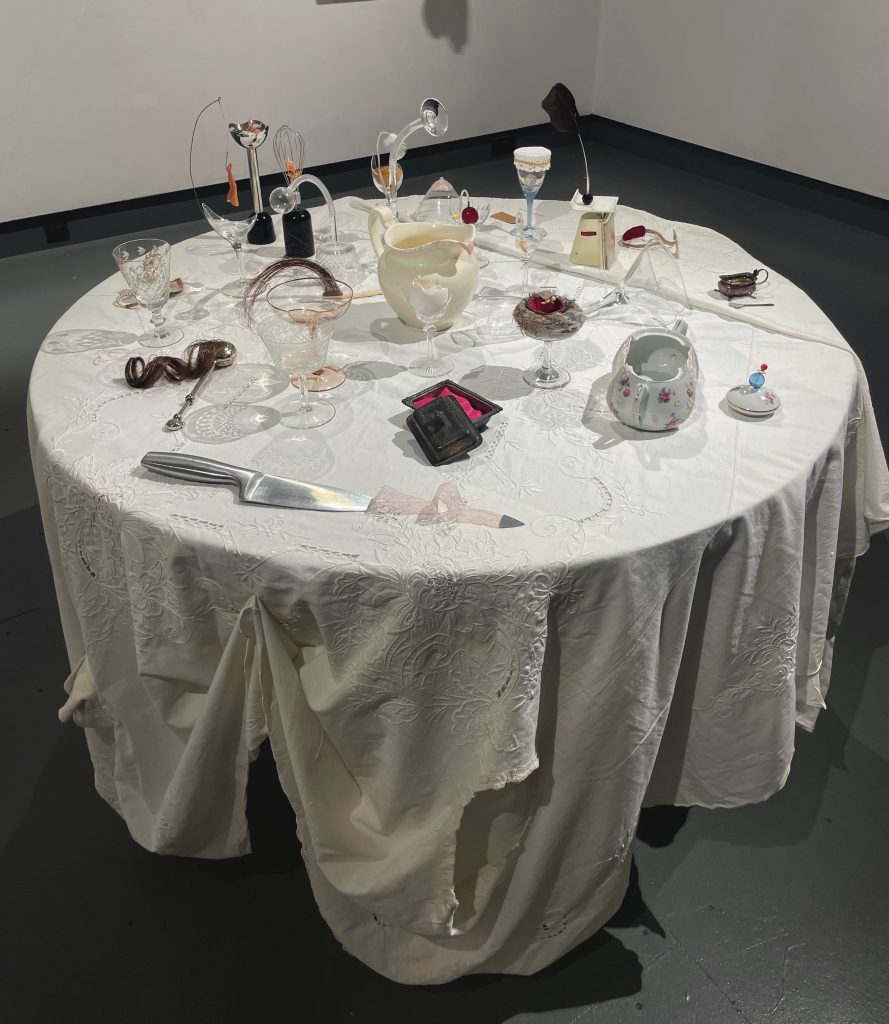
Untitled: Installation
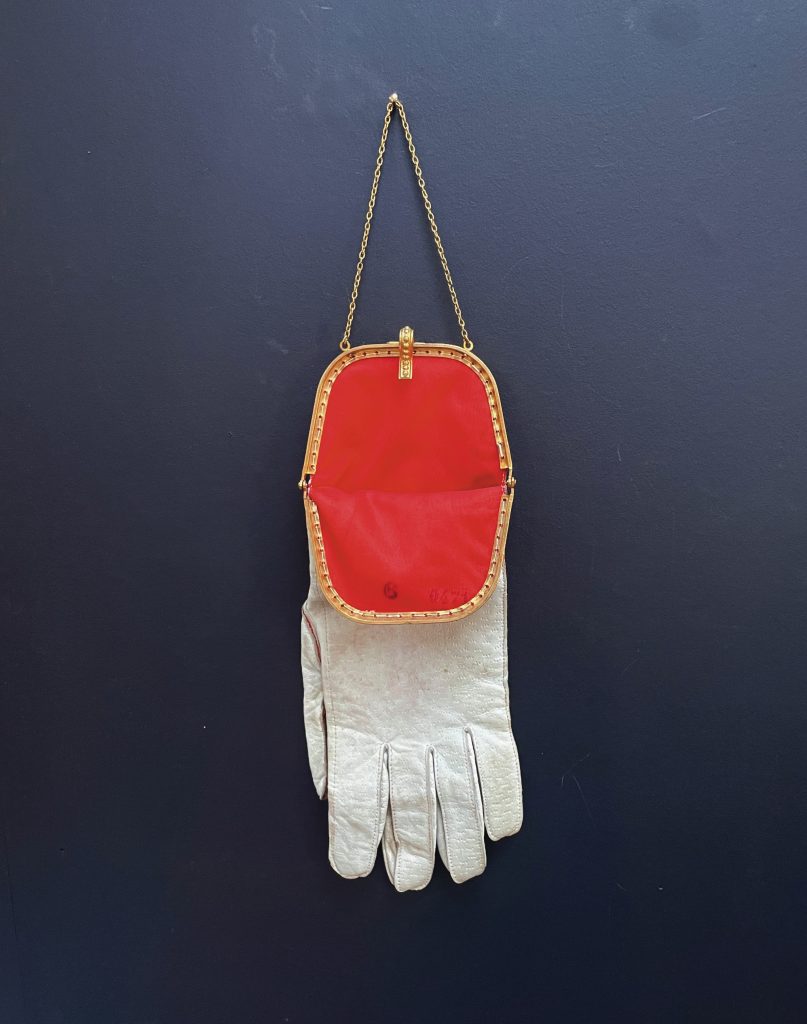
Untitled
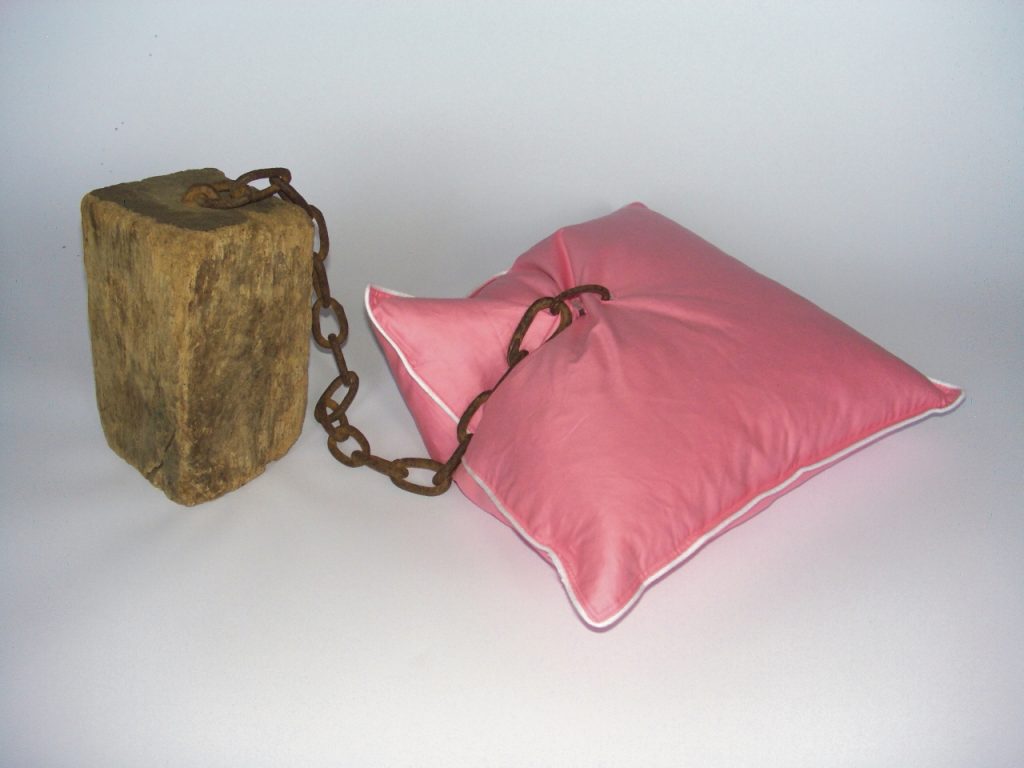
Untitled

Dawn Ades: One of the really striking things about the works we’ve just been looking at in your studio is that they are not necessarily unique freestanding pieces. They interrelate with each other. You move things around, you introduce items to each other
N Z-T: In different settings, the works can be put together differently to tell a different story. Each piece is autonomous but it shares the space with others. To me they are like actors in a wordless play. I think this is probably heavily influenced by the Polish 20th-century avant guard tradition, especially the work of Tadeusz Kantor, a Polish theatre director and artist who used ordinary objects. I saw his plays when I was still a child and they had a profound effect on me. The performance and the space seemed to me to be one single organism.– From a recorded conversation on the occasion of In Absentia at Tabula Rasa Gallery, London, December 2025 – January 2026

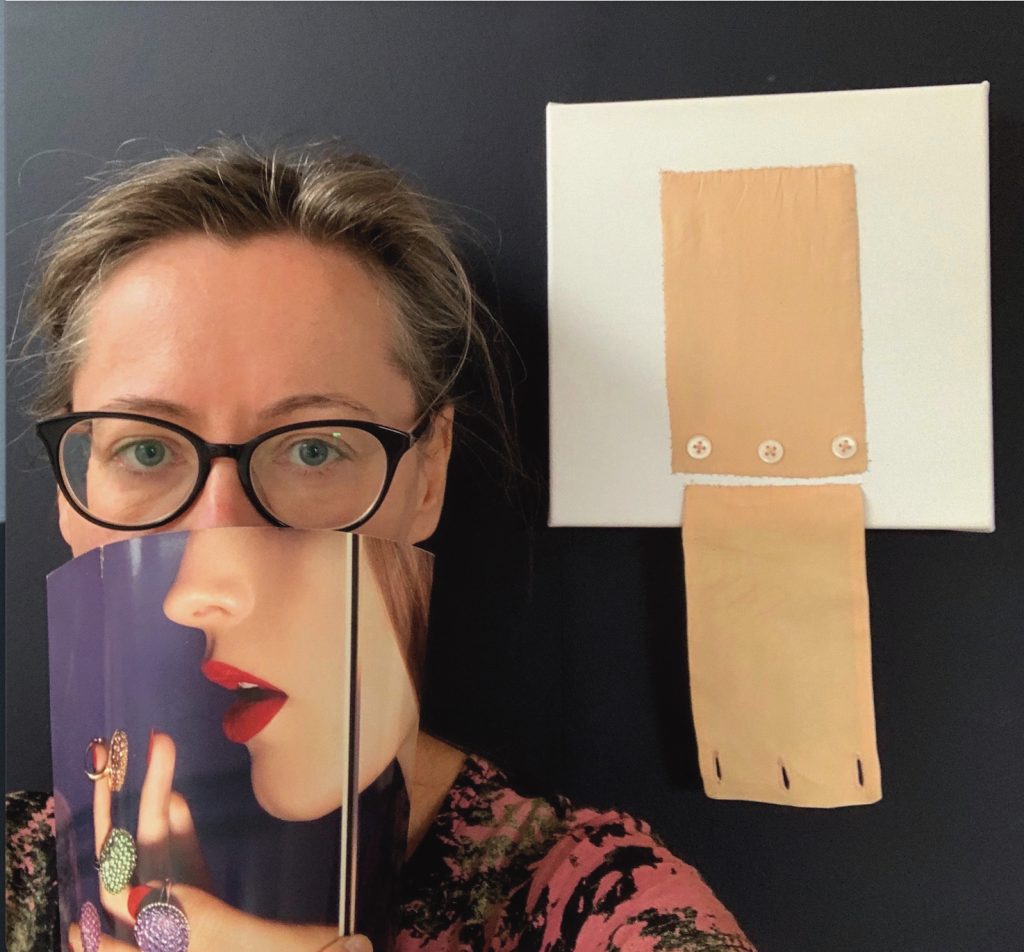
Self portrait with a gusset
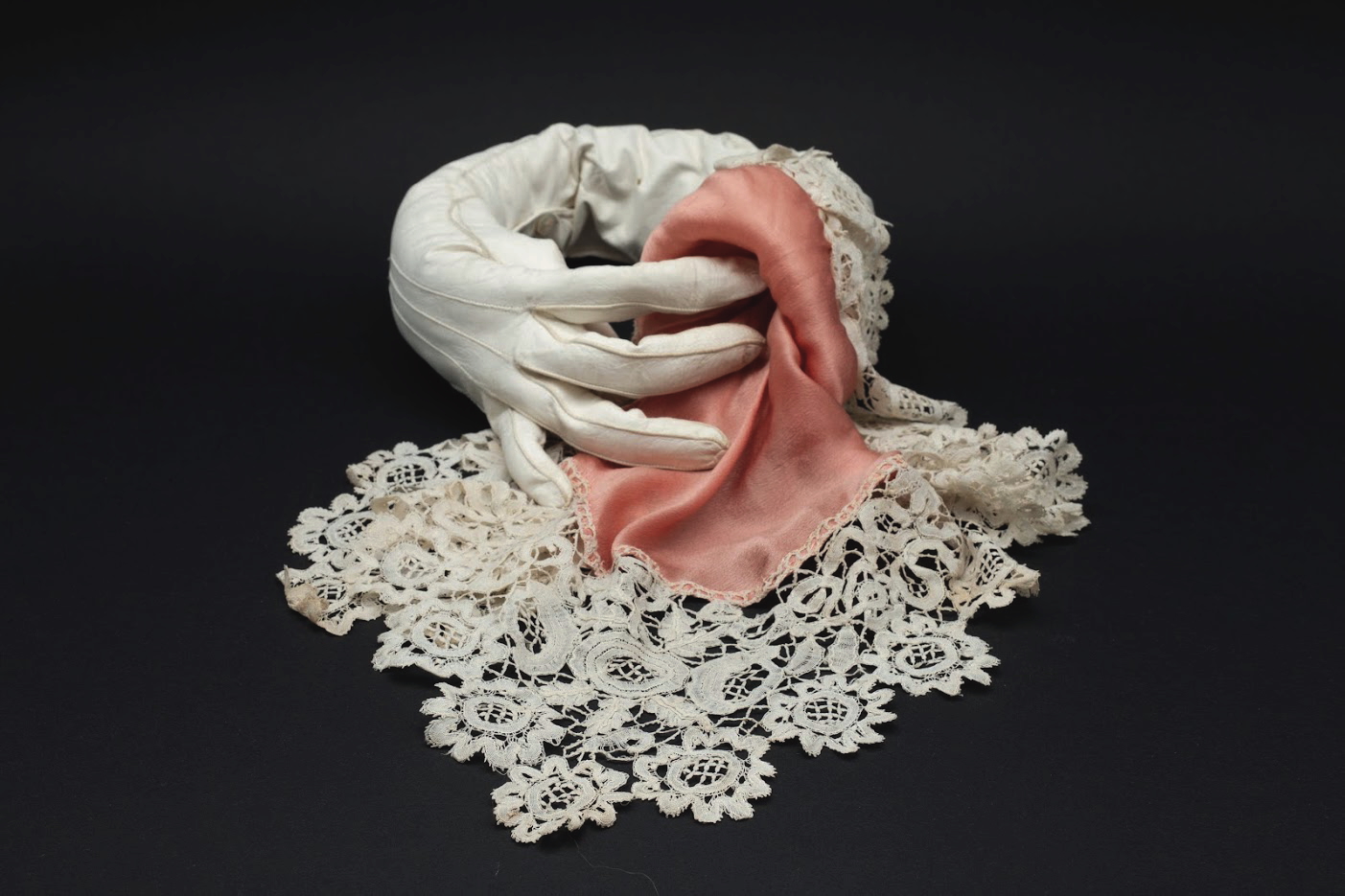
Untitled

Insomnia
From hand to mouth
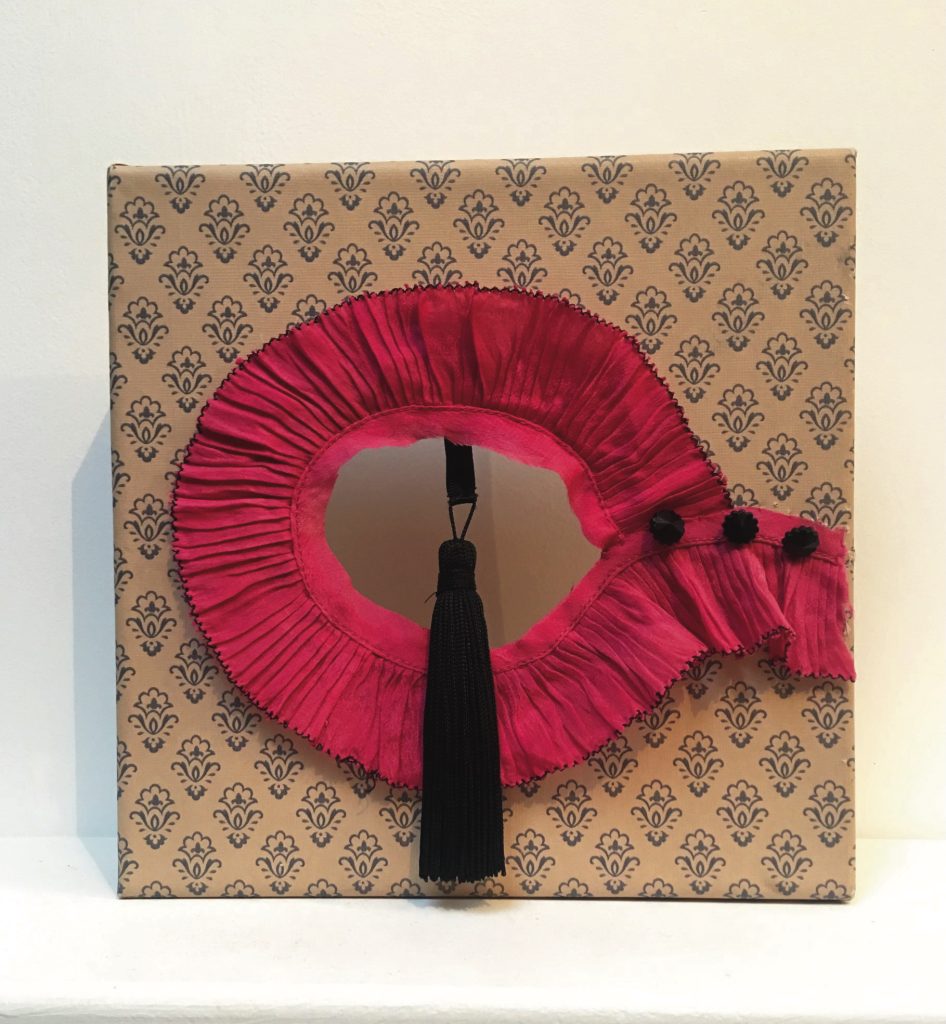
Jabot
Untitled

Untitled
Untitled
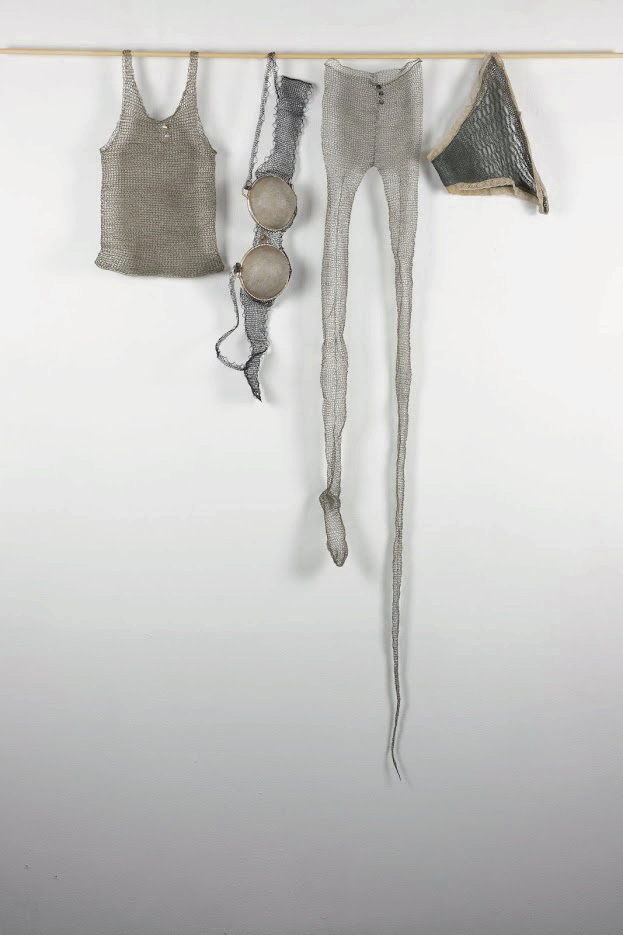
Untitled: knitted wire

Working as a conservator requires close attention to both the physical and the cultural essence of each object, whose physical condition will yield forensic evidence of its unique history. The relationship can in some ways be compared to that of doctor and patient. Unlike a human patient, however, an object has no value beyond the meaning we assign to it; nor can it choose how it should be treated. It must remain passive in the face of physical intervention, which, no matter how careful, can only serve either to confirm or to alter its meaning. Yet many objects that a conservator handles have spent a relatively short time being either used for their intended purpose, at the beginning of their lives, or collected as cultural artefacts. Some have been hidden for hundreds, or even thousands, of years, in attics, in burial sites, embedded in earth or sunk deep beneath the sea. It is then that, safe from human interference, they undergo their greatest metamorphosis. They change shape, colour, texture, even chemical composition. Then sometimes, after this period of relative autonomy, they emerge, as if blinking, into a human culture totally foreign to the one they left behind.
What if such objects were not just passive recipients of our manipulation? What if they had identities, desires and ambitions of their own? In other words, what if, instead of merely reflecting humanity, they had the power to interpret and influence it? These are questions that Zagórska-Thomas asks through her art.
And the process that she hypothesises is something like this . . . Let’s assume that certain objects have outlived their usefulness. Through long contact with human beings, they have assimilated some of the symbolism placed upon them, then used it as a starting-point for their own pursuit of autonomous identity. Because they are not considered – by humans – valuable enough to be collected for themselves, they are engaged in a fight for survival. Taking such snippets of human experience as they have picked up from literature, visual art and music, they adapt them to create new meaning for themselves, one which will justify the value of their existence, not just to us, but to themselves as well.
Tadeusz Kantor said, ‘The object exists between eternity and the rubbish heap.’ It is in that space, suspended between destruction and immortality, that Zagórska-Thomas’s objects fight with her for control of their own destiny.
Christopher Reid & Natalia Zagórska-Thomas, from ExPurgamento, Richard Booth’s Gallery, Hay-on-Wye, 2011
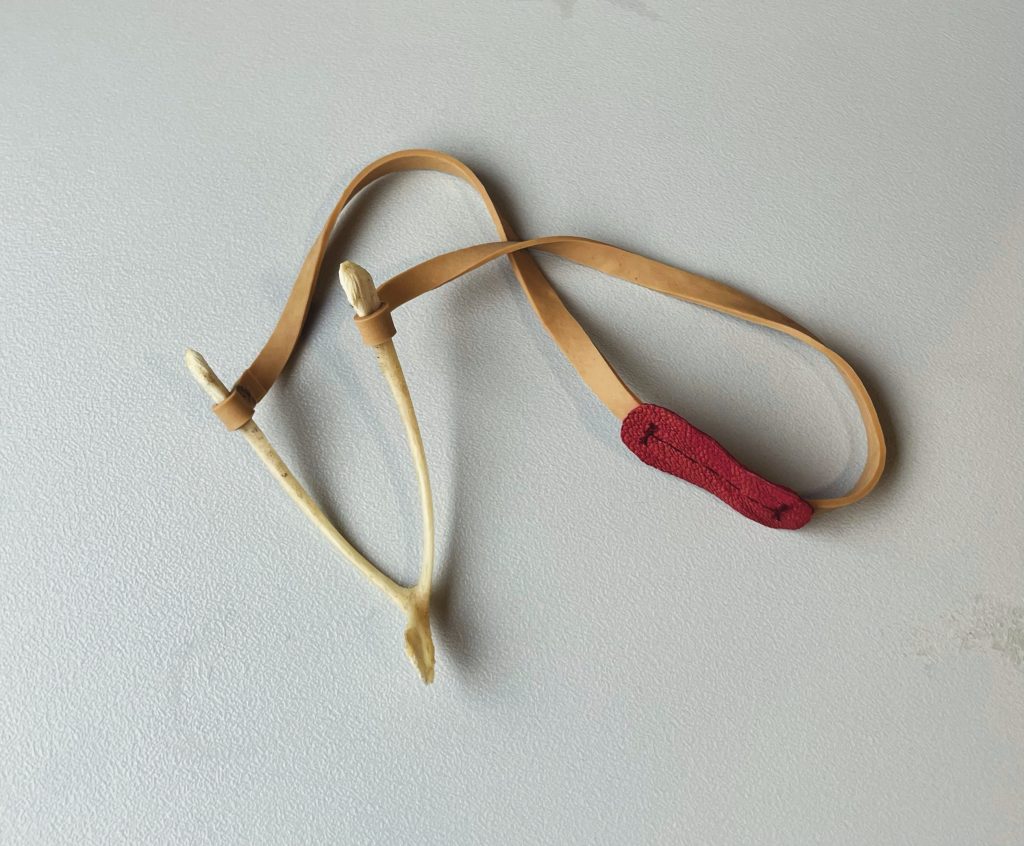
Nike (the goddess not the shoe)
Untitled
Untitled
Untitled
Untitled
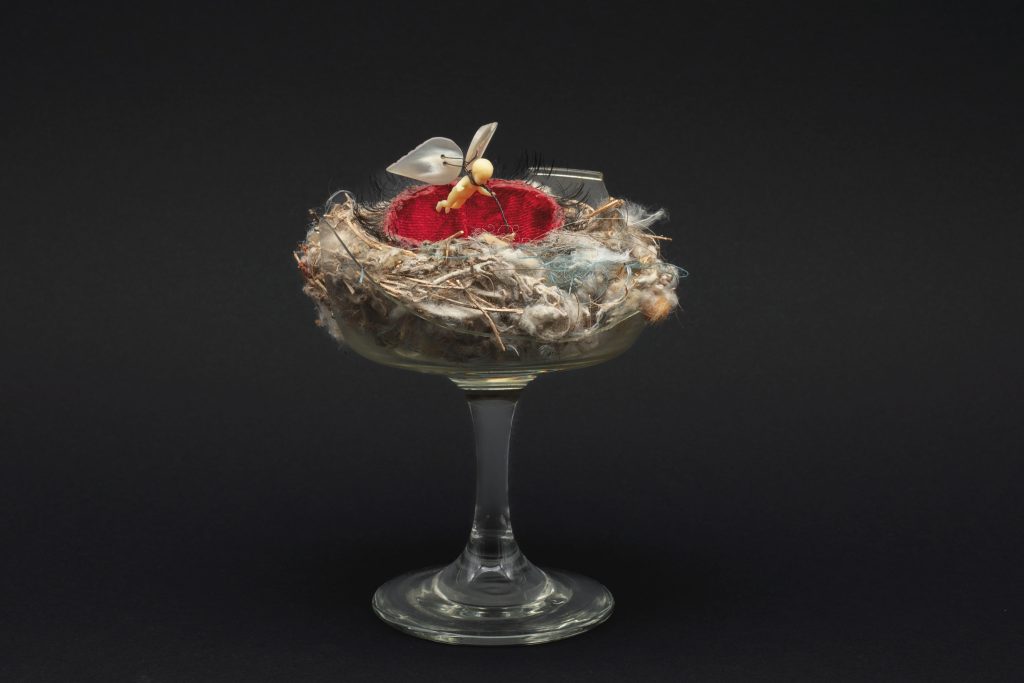
Not waving, drowning
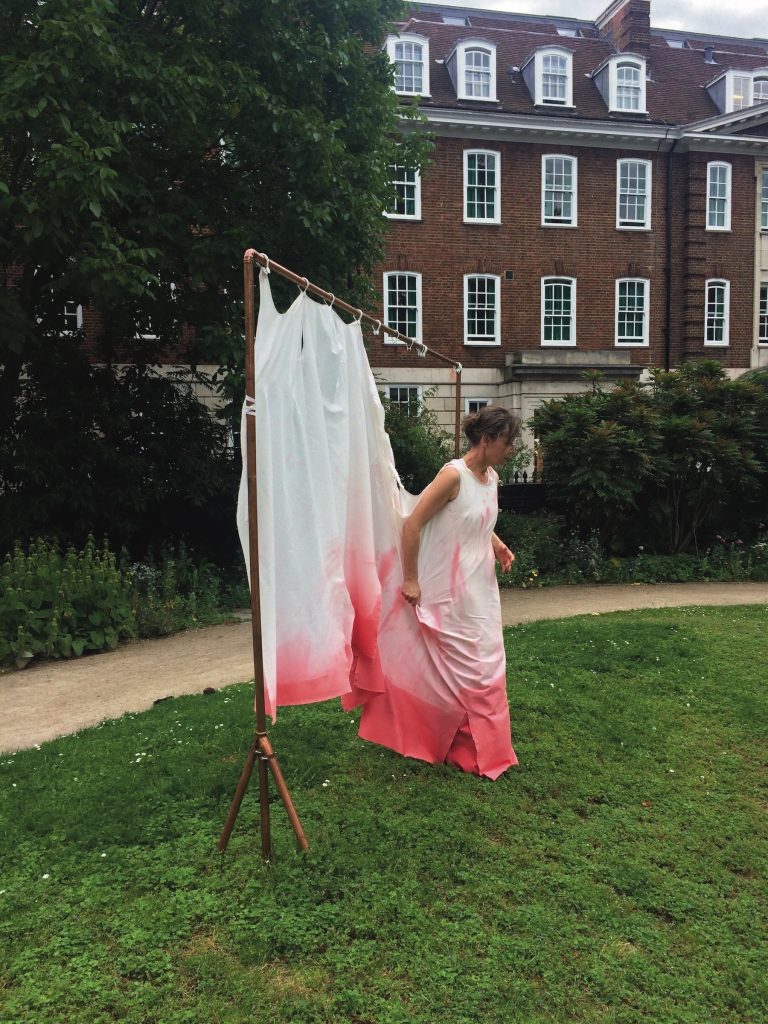
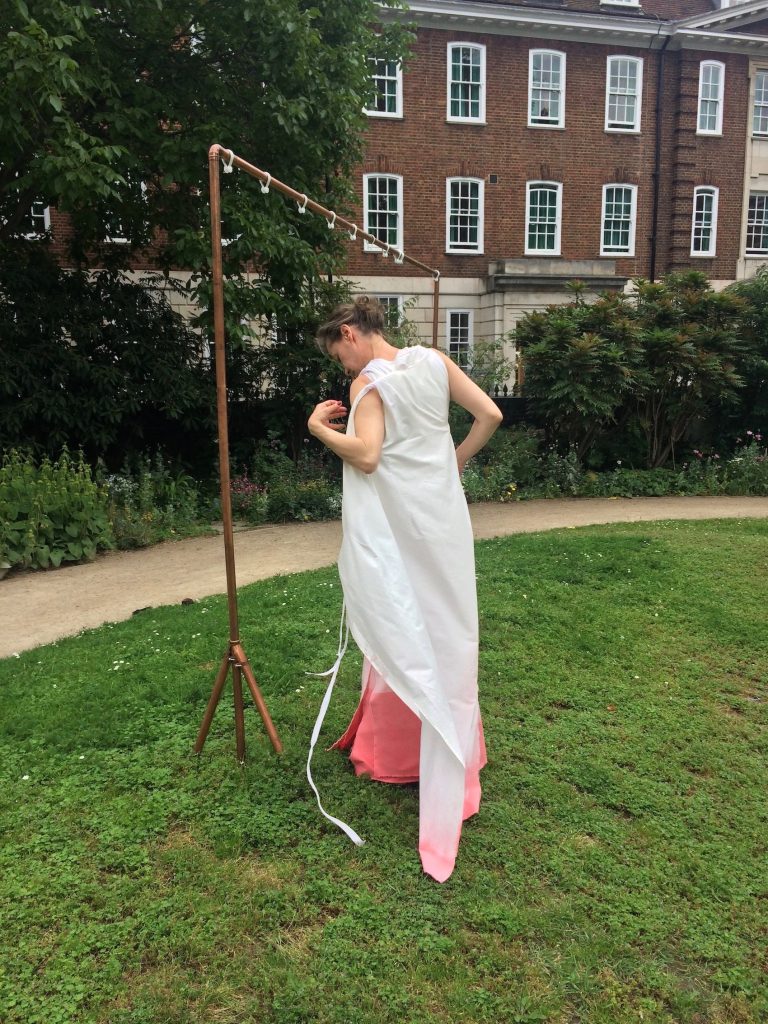
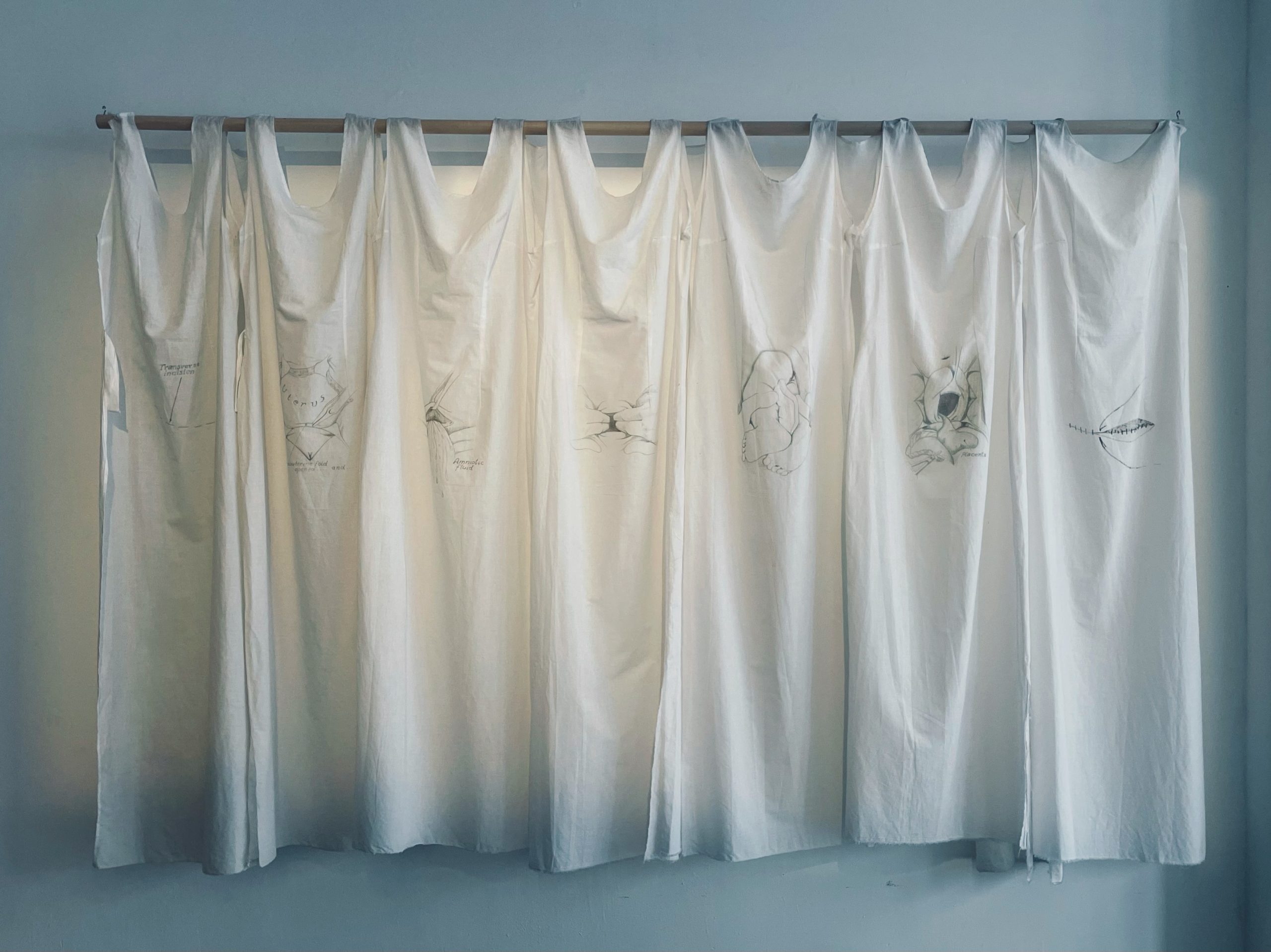
TRANSVERSE INCISION. A continuous dress depicting stages of Caesarean section. Textile sculpture and performance piece.
Untitled
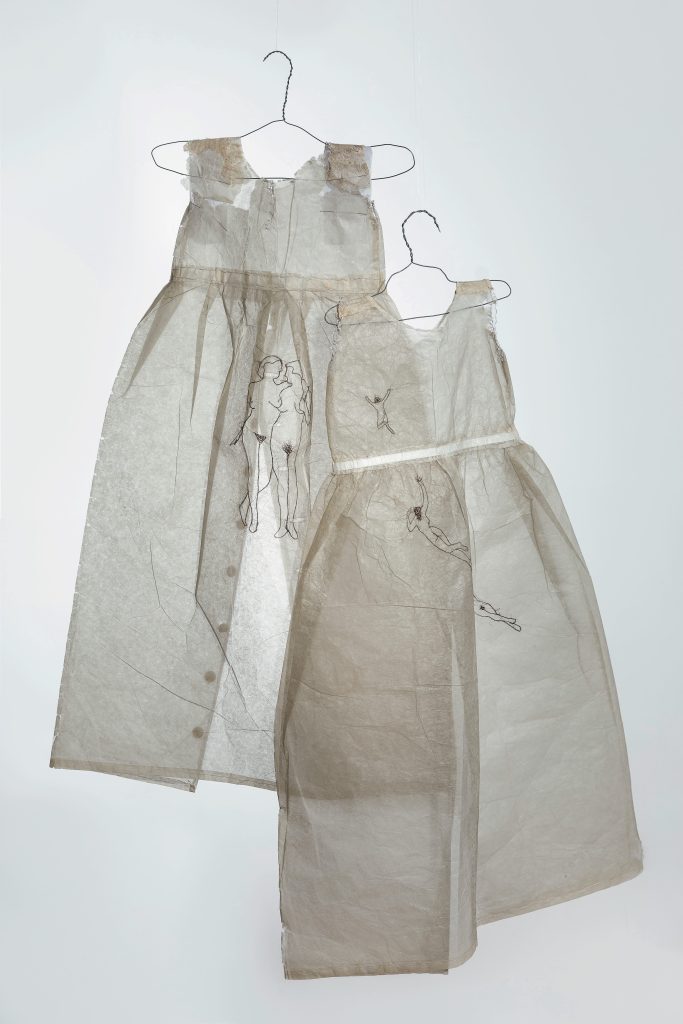
Pale Girl's Dream.
Tissue paper embroidered
with artist's own hair.
Title from a poem by J. Tuwim.

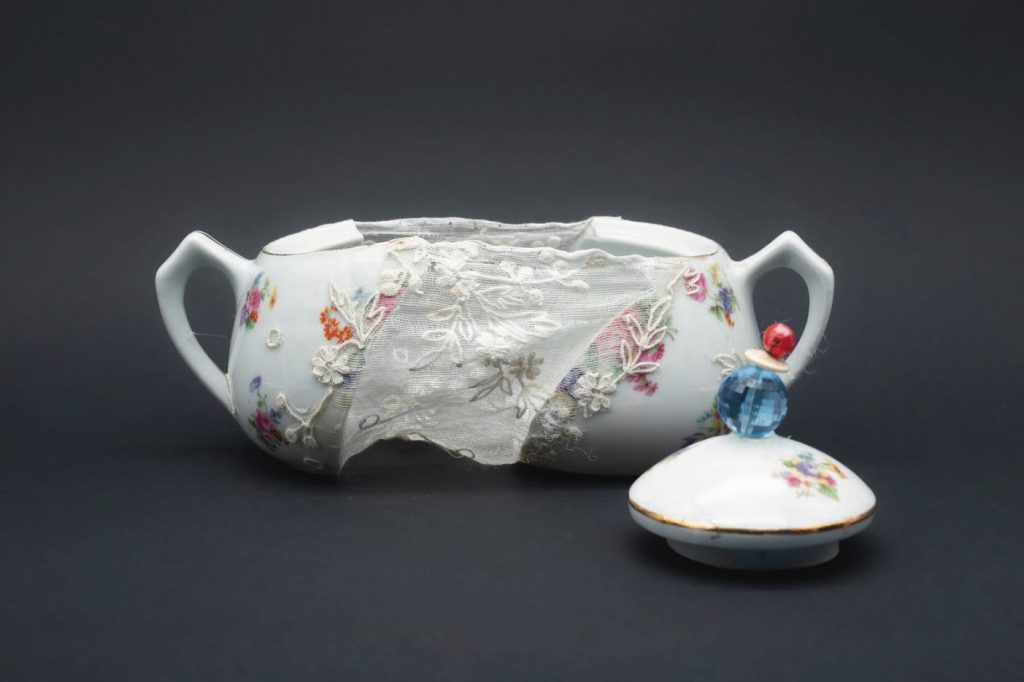
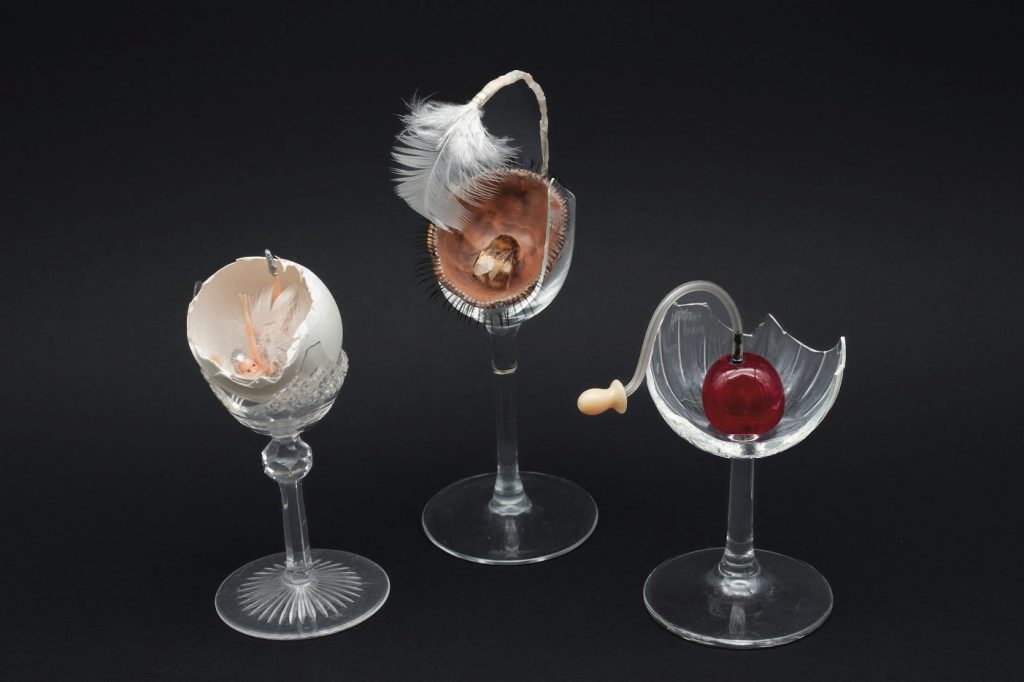
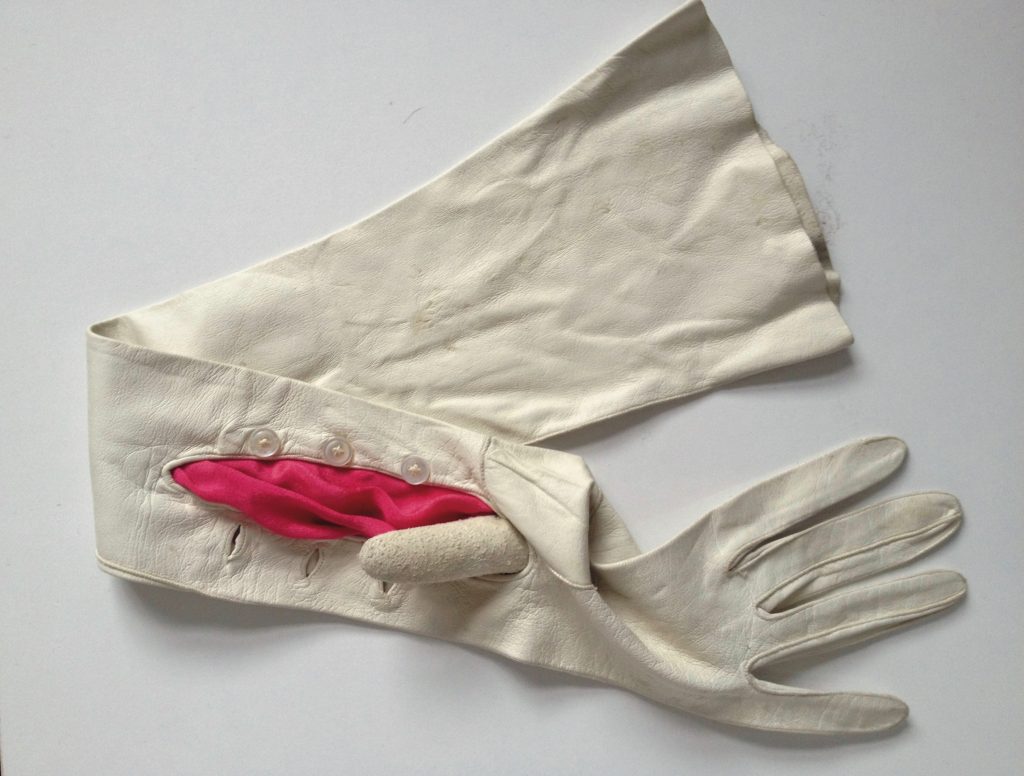
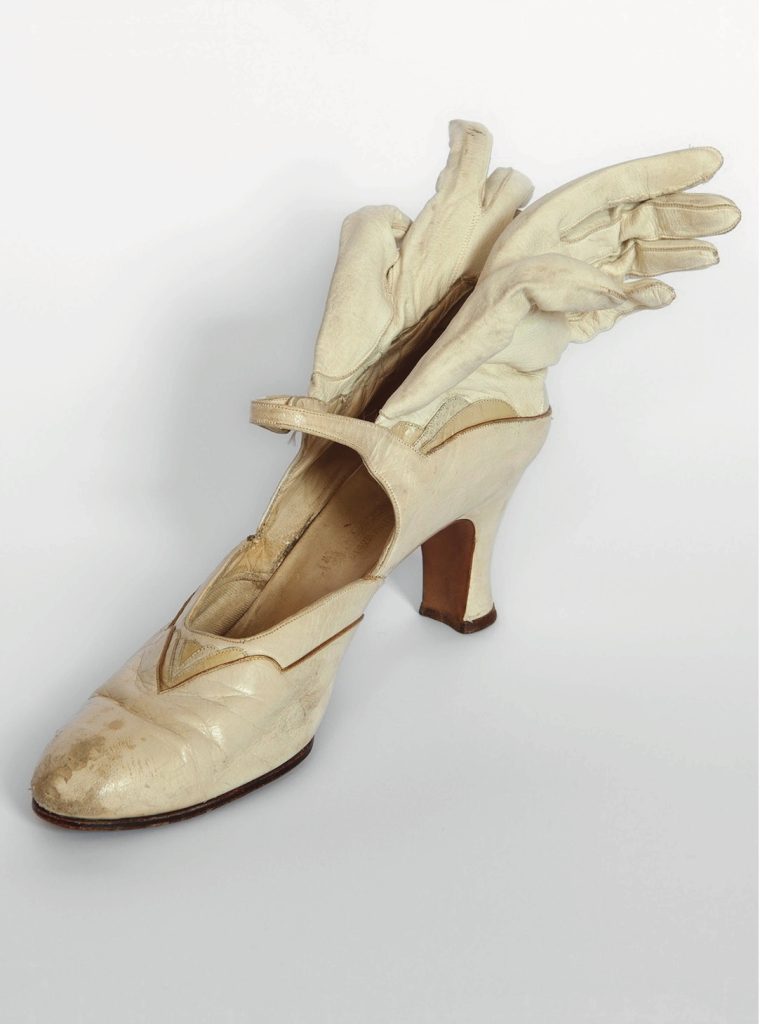
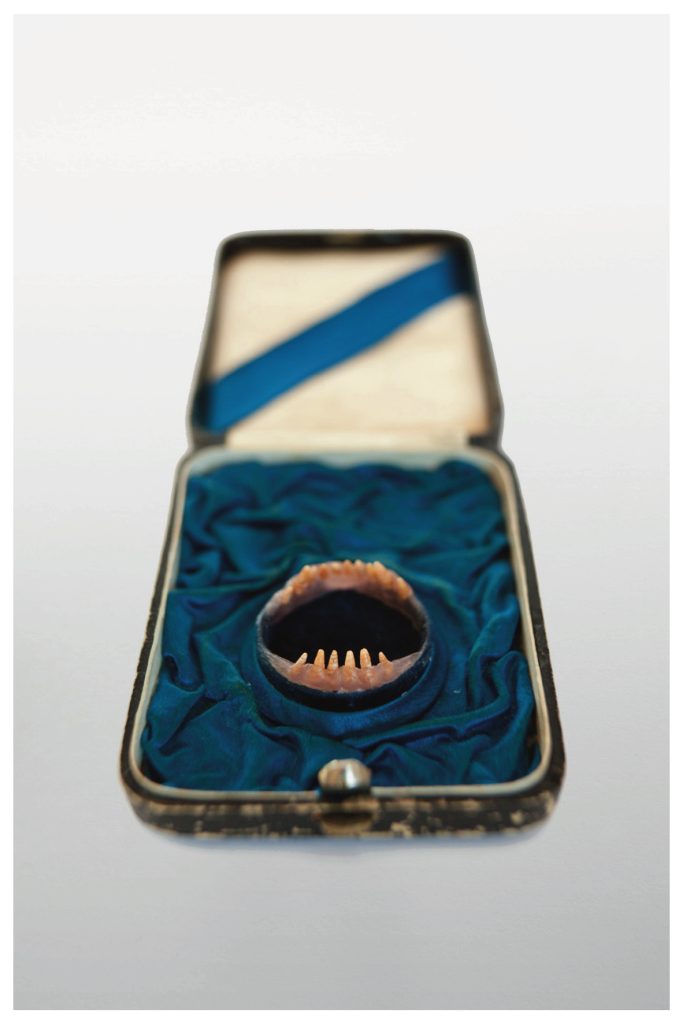
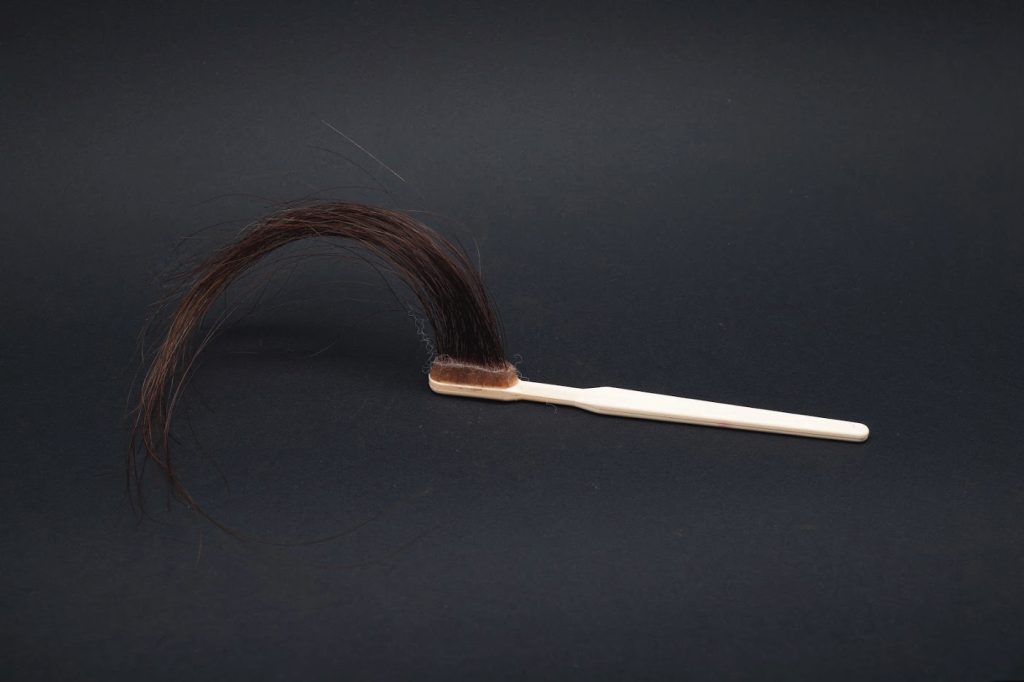
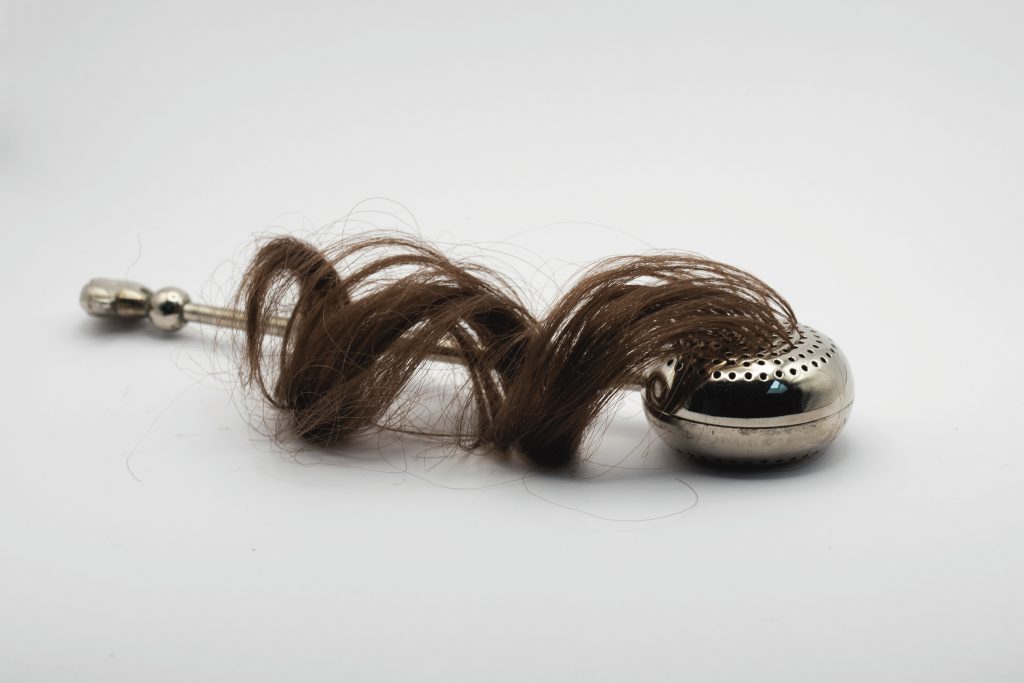
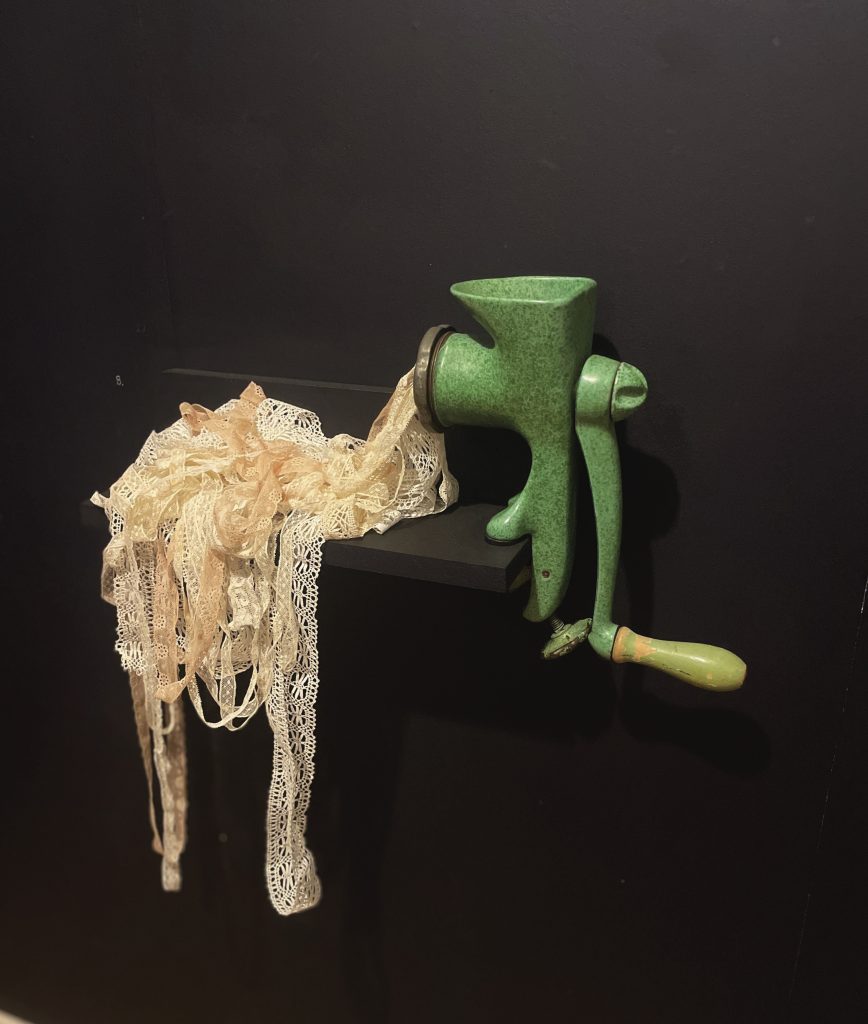
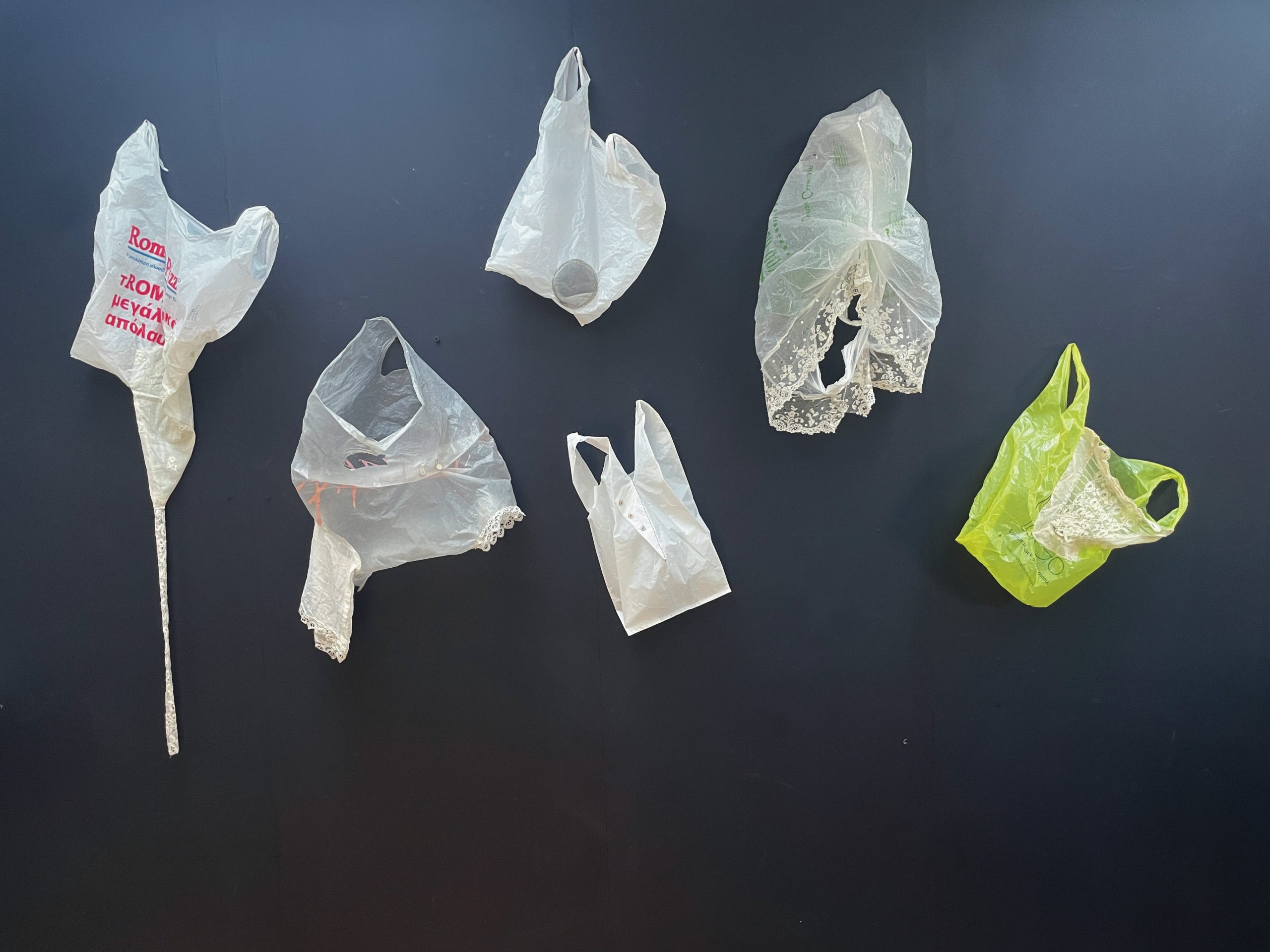
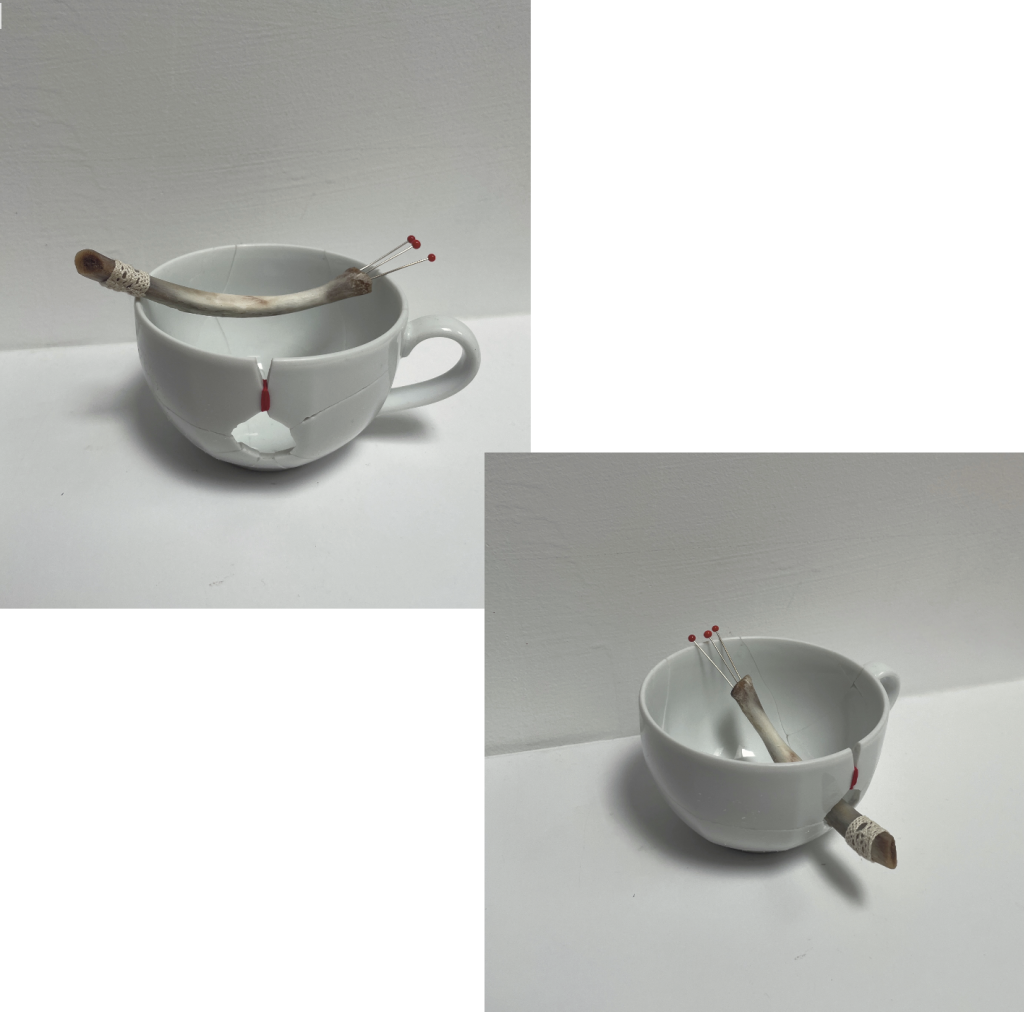
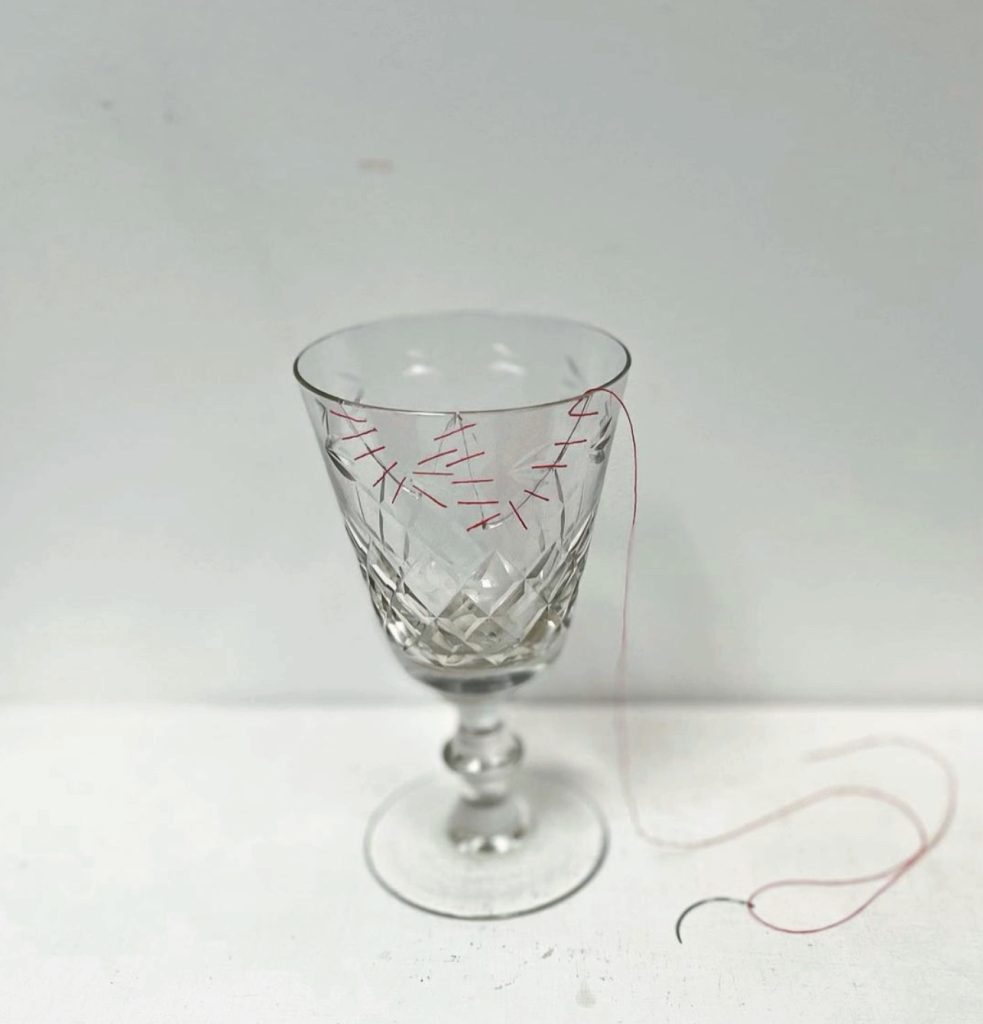
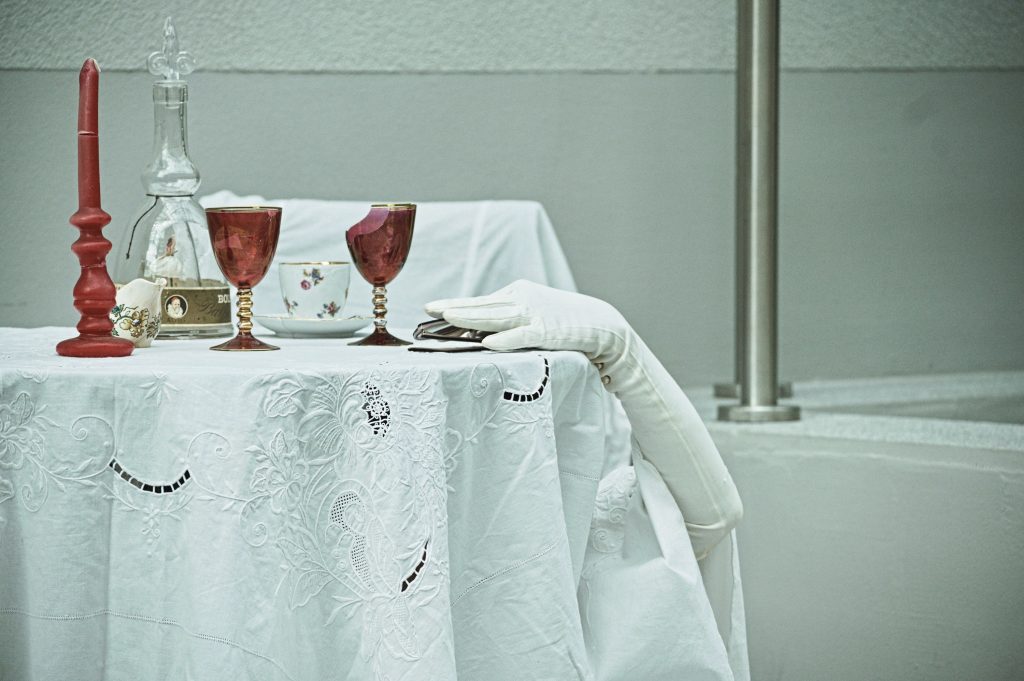
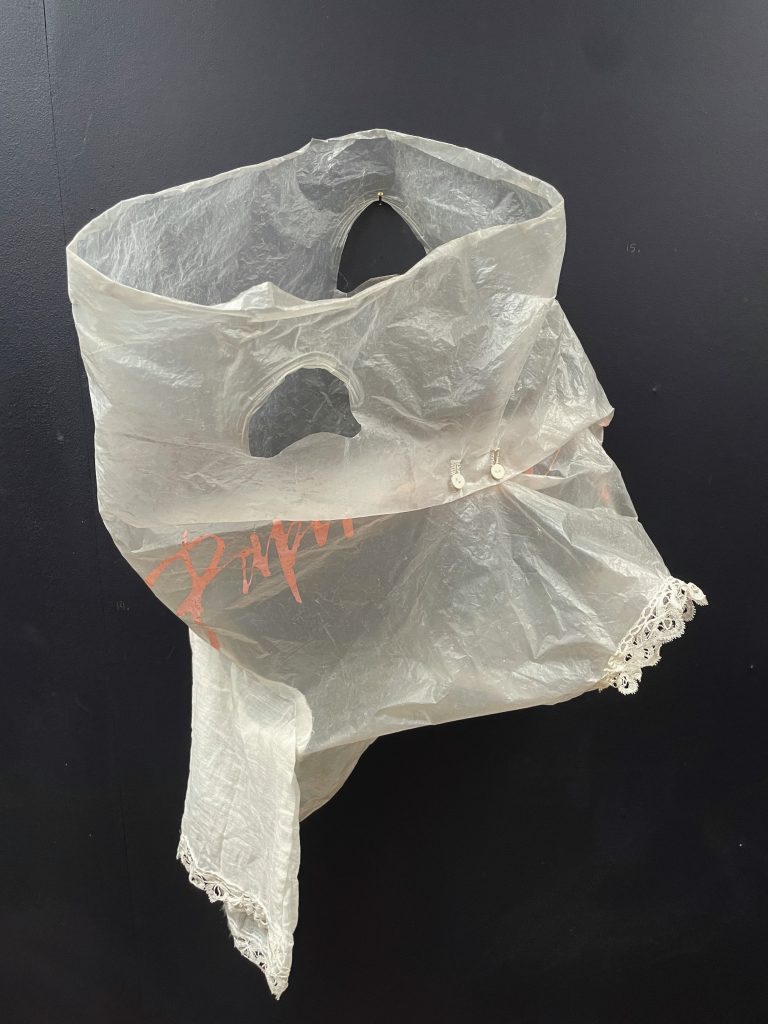
Natalia studied fine art, painted, but from the very beginning also created three-dimensional objects. One by one, objects were called back into existence, rendered with immense precision while being subjected to transformations of their original function, crafted with great respect and profound exploration of their materials and context. Each of these objects carries within it a story stemming from the juxtaposition of its origin and its new identity, endowed upon it by the artist. Matters which usually seem to belong to different worlds encounter each other here. A shoe, a glove, women’s lingerie, cosmetics, a powder box, a napkin, a teacup or a glass – these often broken, chipped, reclaimed objects – thrown together in unexpected ways yet connected to one another, gain new meaning, making us aware of the transience and fragility of life. Yet there is no lack of humour in all of this. Plastic bags ‘embellished’ with painstakingly crafted antique lace – the disposable and the once-valuable joined together – confound and defy conventional thinking. Traditional classification systems have no place here. This is legitimisation of the dismissed and discarded; the refinement and respect for what is seemingly worthless.– Małgorzata Sady, on the occasion of Biuro Rzeczy Zagubionych at lokal_30, Warsaw, April–June 2026

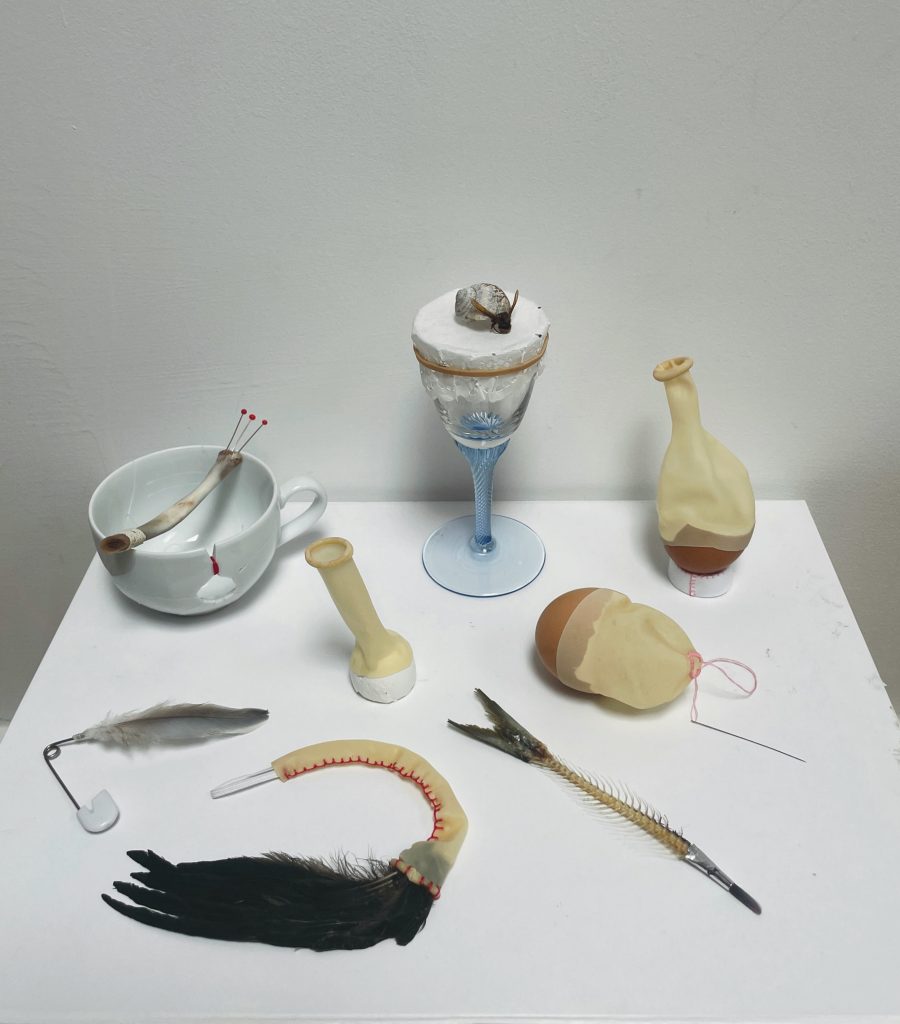
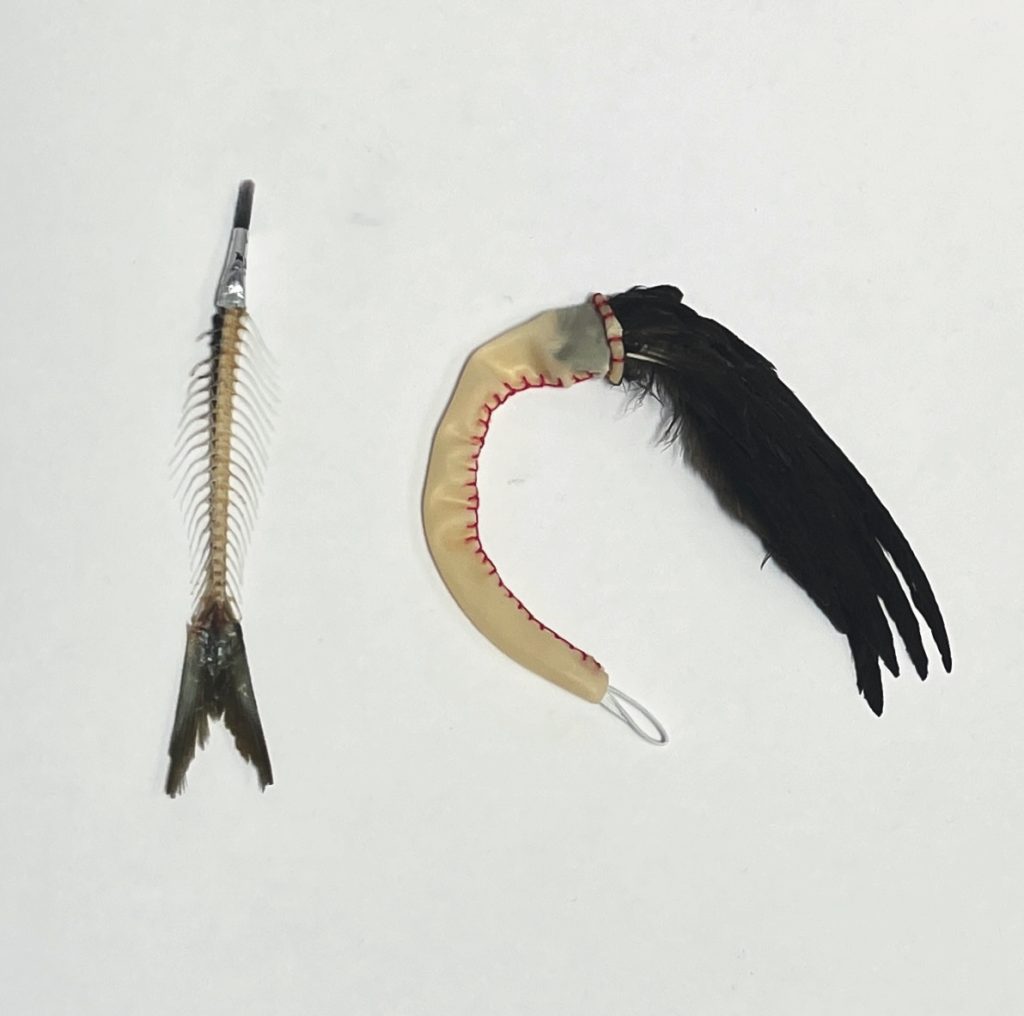
Unknown ritual objects. Tuscany, Late Anthropocene.
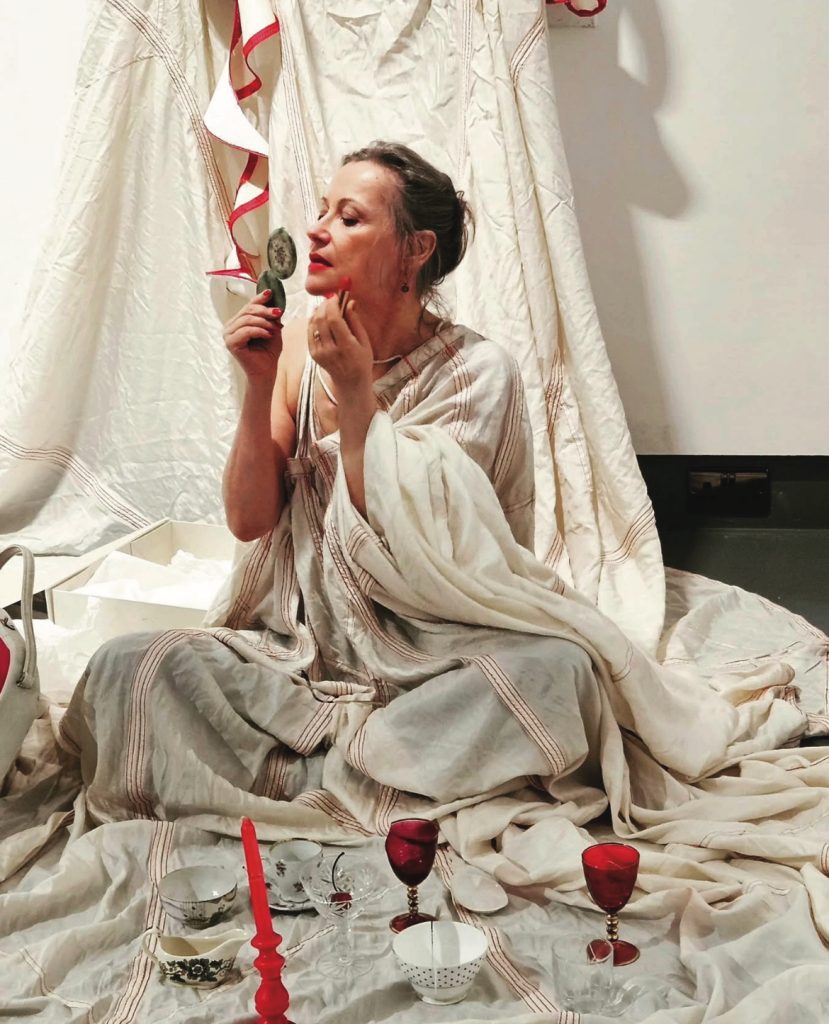
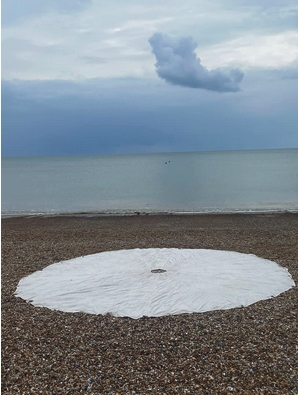
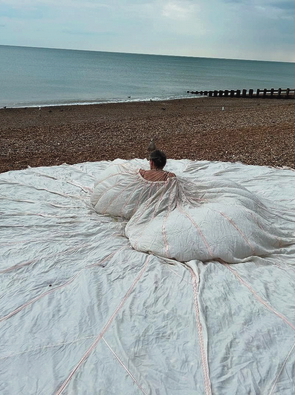
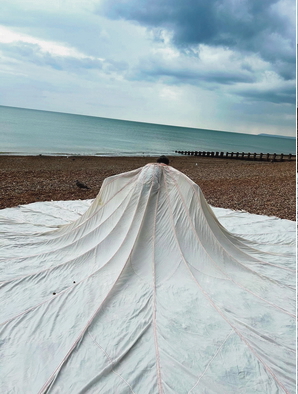
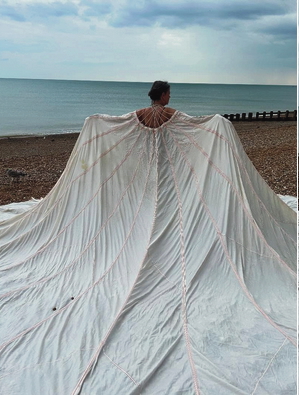
Still from a performance
at Tabula Rasa Gallery, Hoxton

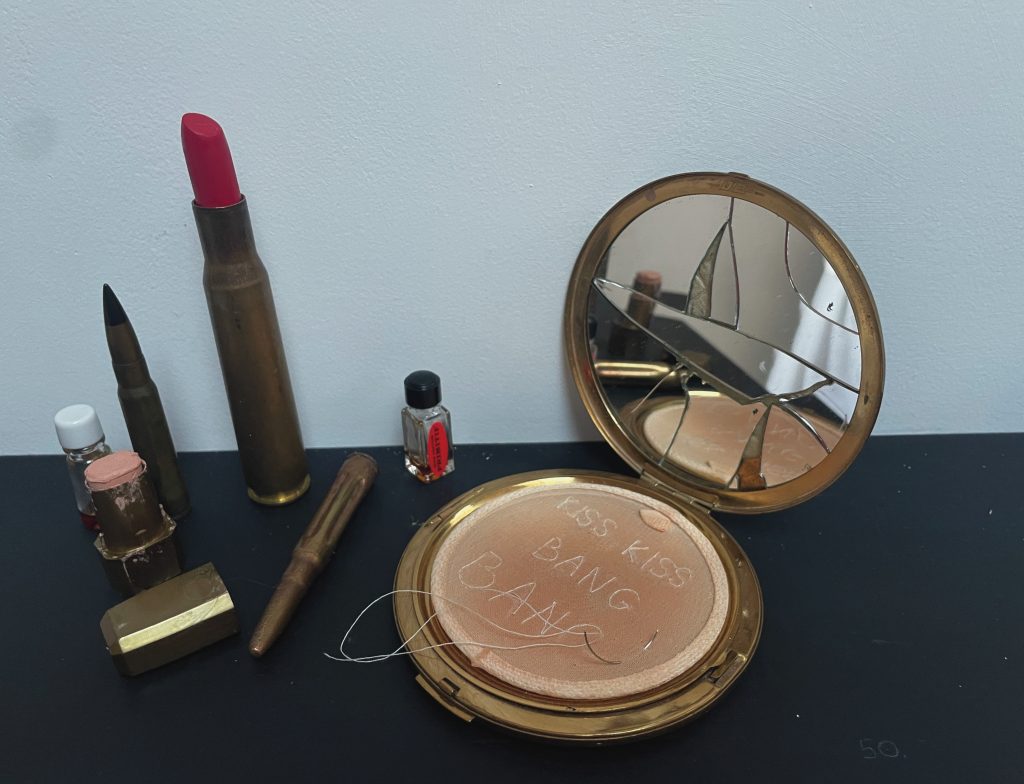
Some juxtapositions come from the shock of recognition: like the extraordinary similarity of a bullet case and a lipstick holder. The relationship between the real violence of the bullet vs. fear of female sexuality, even a performative, supposedly compliant femininity as expressed by red lipstick. There is this underlying narrative that female sexuality is secretly more dangerous than overt male violence though no one will spell out exactly how.
The narrative is that there is some kind of equivalency between violent need to dominate and refusal to be dominated, even though there obviously isn’t. This kind of projection and inversion of moral logic is such an intricate network of total nonsense that if you try to unravel it – you are the one who appears insane. I suppose I am often searching for ways of expressing that, without being too literal. I can’t really think of a more universal issue, yet talking about it is treated as a niche interest. Just talking about your own life as a woman is considered a side issue and as such – a political act in opposition to the main narrative.
– N Z-T in conversation with Dawn Ades

Kiss Kiss Bang Bang. Mixed media with bullet shells.
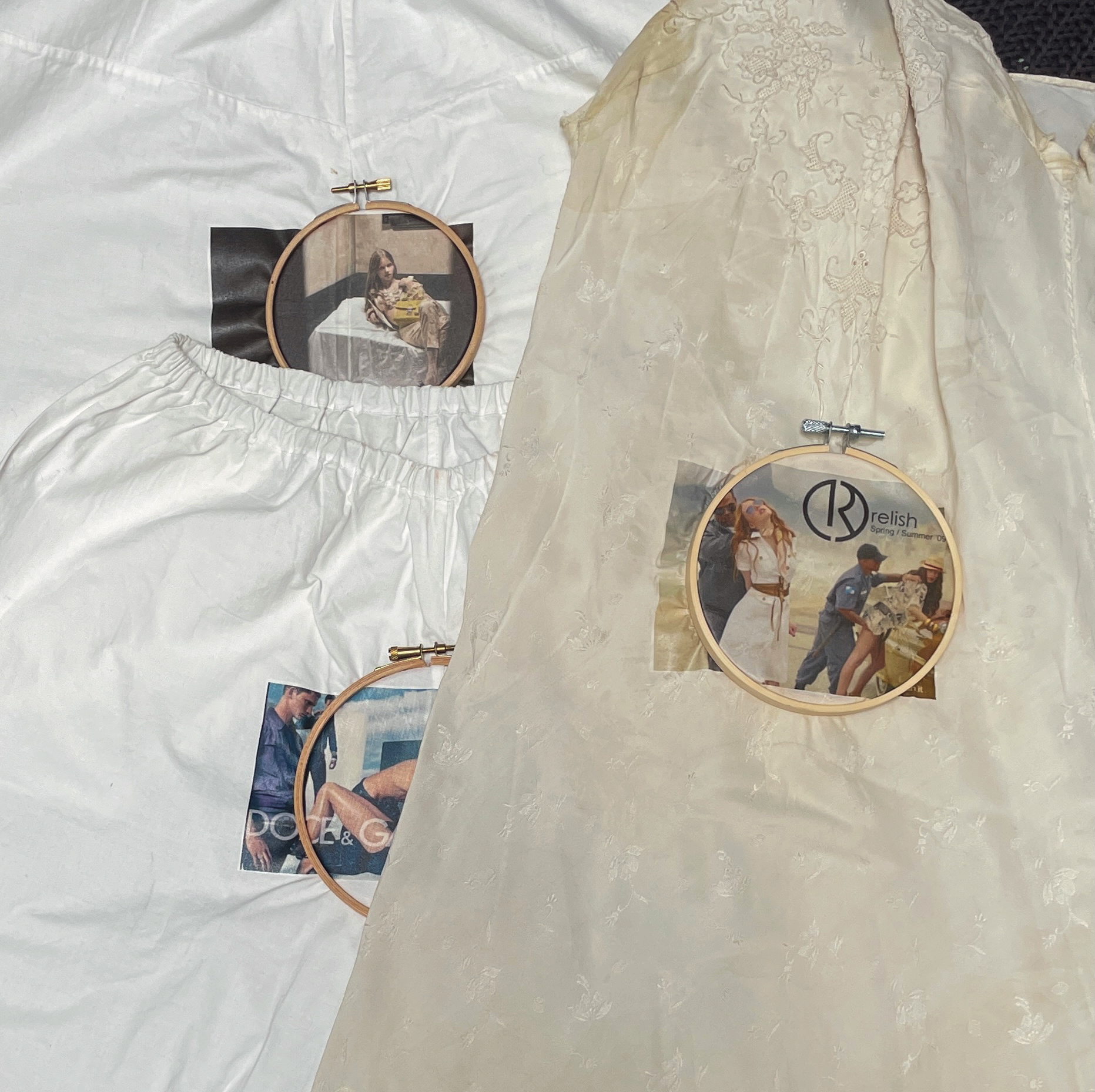
This collection of garments is an ongoing project archiviving violently misogynistic high-fashion advertising by major brands such as Miu Miu, Dolce & Gabana, Relish Jeans, etc. All released since the begining of the 21  st century.
Medusa. Stills from a performance at Electro Studios Project Space, St Leonards

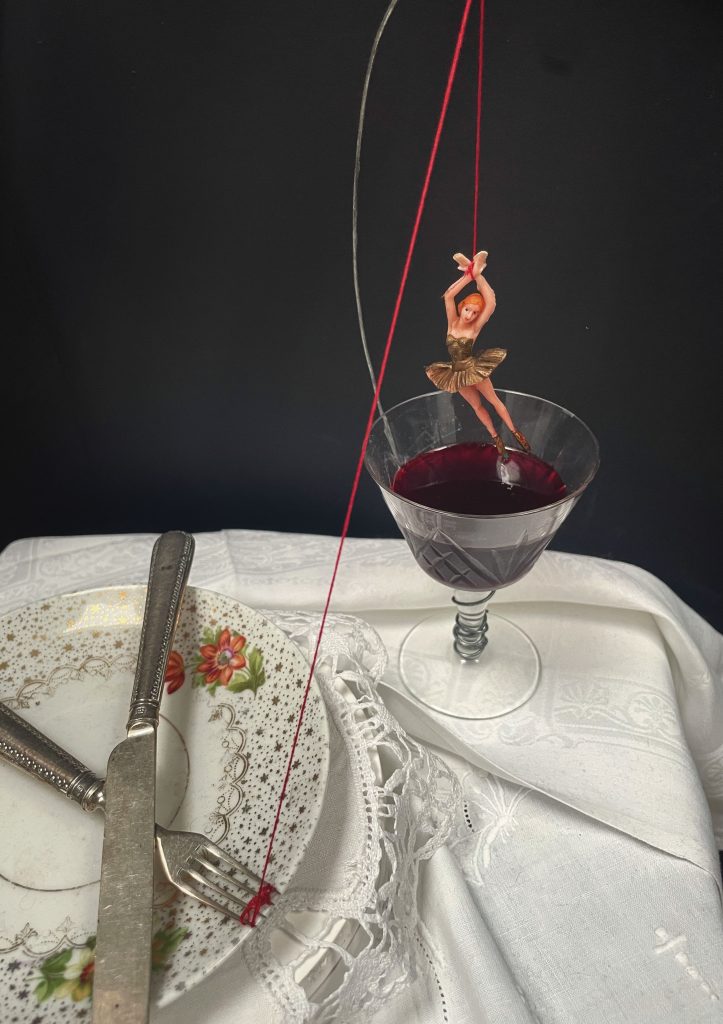
I happened to hear the harp on the radio this morning, and suddenly it brought Natalia’s works very vividly to mind . . . The sound of the harp – like all instruments, the timbre and range of its notes is unique – seemed to become one of her delicate, fragile, objects. The striking of the string has a kind of globular resonance, a rounded transparency like a drop of water, The completely unexpected association with the harp, also seemed fitting for the slightly archaic, nostalgic nature of the glass, silver and porcelain ware Natalia singles out and works with. They, like the harp, tend to recall more gracious times, though this in her work tends to be double-edged.

Natalia’s objects are somehow combinatory – they meet in all kinds of unexpected conjunctions. The continuities and thematic variations reminded me of music in the way one motif becomes the source of almost infinite melodic developments Objects also harbour noises, both literally and metaphorically. Glass can hum and ring, or smash; shells crunch. Although the objects are necessarily silent in exhibitions, sometimes Natalia’s performances involve or suggest sound: the egg shells, for example. There are so many associations of materials with sounds, from loud noises to the barely perceptible, like a breath. In trying to express the effects of sensations across different senses I was reminded of Duchamp’s concept of the ‘infrathin’, which could only be indicated through examples. It is almost not there – transparency, he writes, is infrathin. It’s unfathomable, endlessly fascinating, and peculiarly difficult to transmit.
– Dawn Ades, May 2026

Dawn Ades: Things that you think are beautiful, and things that perhaps are not innately beautiful, you can make beautiful by adding something to them.
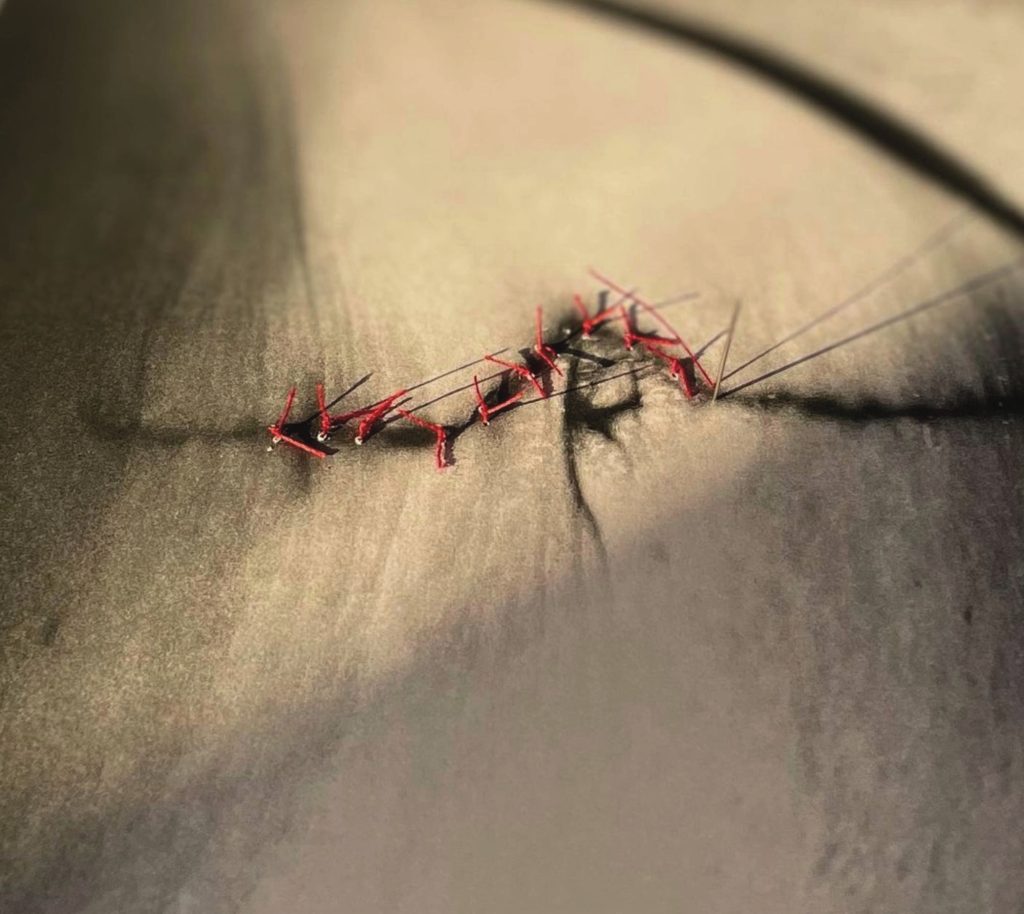
N Z-T: Generally the things I use are already beautiful to me, so I clearly find damage and loss visually compelling in some way. Damage implies an event, a story, the passage of time so part of the narrative is there already, before I start. That narrative quality of ordinary objects is a large part of what makes them so important as evidence of human activity, why we collect and study them. They are subject to the same reality and go through the same events as us – we can see what we’ve been through by what they’ve been through. I find scars can be beautiful for similar reasons.